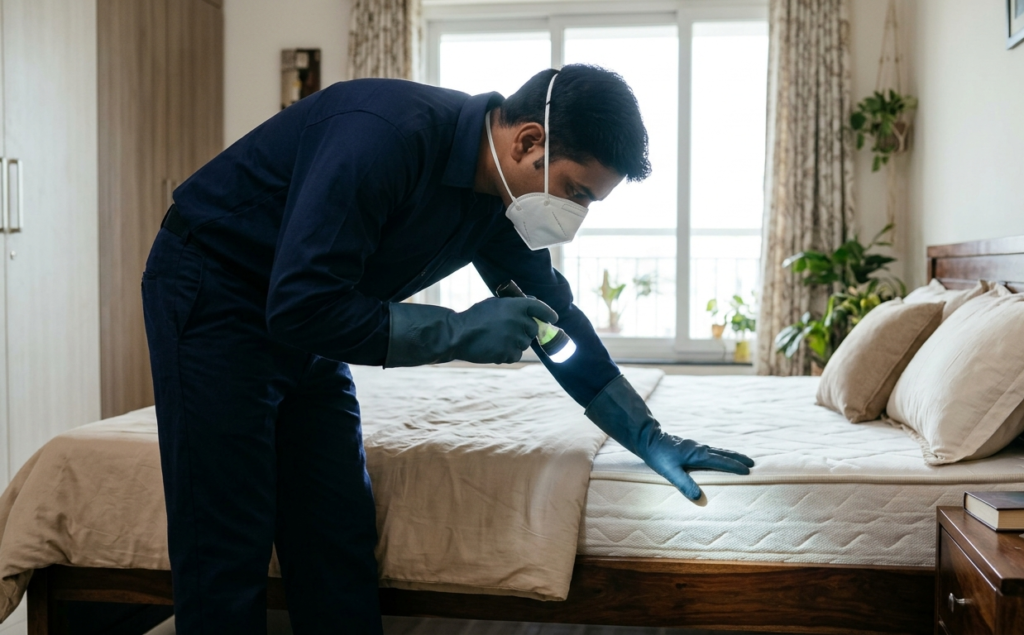
Bed bugs are among the most frustrating household pests because they can hide in small spaces, reproduce quickly and remain unnoticed until an infestation becomes noticeable. These tiny insects commonly hide in mattresses, bed frames, furniture joints, headboards and cracks around bedrooms.
Unlike mosquitoes and flies, bed bugs do not usually fly or jump. They move by crawling and can spread from one location to another through luggage, clothing, used furniture and other personal belongings.
A bed bug infestation can disturb your sleep, cause itchy skin reactions and make your bedroom uncomfortable. Regular cleaning alone may not be enough to eliminate an established infestation because bed bugs can hide in difficult-to-reach places.
If you are searching for reliable bed bug treatment in Pune, understanding how these insects spread, how to identify them and which treatment options are available is important.
In this detailed guide, PestiGo explains the causes of bed bug infestations, common warning signs, prevention methods and the importance of professional bed bug control.
Bed bugs are small, reddish-brown insects that feed on human blood. They are generally more active at night and prefer hiding in places close to where people sleep.
Adult bed bugs are usually around 4–7 mm long and have flat, oval-shaped bodies. After feeding, their bodies may become more swollen and darker in appearance.
Bed bugs do not mean that a home is dirty. They can enter clean homes, hotels, apartments and other properties through infested luggage, second-hand furniture and personal belongings.
Because they are skilled at hiding, identifying an infestation early can be challenging.
Bed bugs usually enter properties by travelling with people or their belongings. They do not necessarily develop because of poor household hygiene.
Some common causes include:
Bed bugs can hide in hotel mattresses, headboards, luggage storage areas and upholstered furniture.
When travellers place their luggage near infested areas, bed bugs may crawl into bags and travel back home.
Used mattresses, beds, sofas and wooden furniture may contain bed bugs or their eggs.
Always inspect second-hand furniture carefully before bringing it inside your home.
Bed bugs may spread between neighbouring apartments through certain gaps, shared spaces or infested belongings, depending on the building structure.
An infestation in one apartment may sometimes require inspection of nearby areas.
Suitcases, backpacks and travel bags can provide hiding places for bed bugs.
After returning from a trip, inspect luggage and wash suitable travel clothing according to fabric care instructions.
Bed bugs can hide in clothing, blankets, curtains and other fabric items.
Moving infested belongings without proper precautions may spread them to other rooms.
Identifying bed bugs early can help prevent an infestation from spreading.
Look for these warning signs:
You may notice small reddish or brownish stains on bedsheets, pillowcases and mattresses.
These stains can occur when bed bugs are accidentally crushed after feeding.
Bed bug droppings may appear as small dark spots on mattress seams, bed frames and nearby furniture.
Inspect the corners and stitching of mattresses carefully.
Some people develop itchy red marks after bed bug bites. Reactions vary from person to person, and bites alone cannot confirm an infestation.
If you notice unexplained skin reactions, inspect your sleeping area for additional signs.
Bed bugs shed their outer skins as they grow.
These pale, translucent skins may be found near mattress seams, bed frames and furniture joints.
Adult bed bugs are small, oval-shaped and reddish-brown.
Check mattress seams, headboards, bed frames and cracks around sleeping areas.
Bed bug eggs are tiny, pale and difficult to notice without close inspection.
They may be attached to surfaces in hidden areas near sleeping spaces.
A larger infestation may sometimes produce an unpleasant, musty smell.
However, odour alone is not a reliable way to confirm bed bug activity.
Lizard Control in Pune: Causes, Prevention Tips and Effective Solutions
Read this blog
Bed bugs prefer small, dark spaces where they can remain close to their food source.
Common hiding places include:
A proper inspection should cover more than just the mattress. Bed bugs may spread to nearby furniture and other rooms when an infestation becomes established.
Check mattress seams, corners, labels and stitching for live insects, eggs, shed skins and dark spots.
Pay particular attention to areas close to the headboard and bed frame.
Regular inspections can help identify early signs of infestation.
Wash bedsheets, pillowcases, blankets and suitable clothing according to their fabric care instructions.
Where the material permits, use a hot dryer cycle. Heat treatment through appropriate laundry equipment can help kill bed bugs and eggs in treated items.
Keep cleaned items separate from potentially infested belongings.
Carefully vacuum mattress seams, bed frames, furniture joints and nearby floor areas.
Dispose of vacuum contents in a sealed bag immediately after cleaning.
Vacuuming can help reduce visible insects, but it may not eliminate an established infestation.
Unnecessary clutter creates additional hiding places for bed bugs.
Organise clothes, remove unused cardboard boxes and keep belongings away from sleeping areas.
Avoid moving potentially infested objects into other rooms.
Before bringing used beds, sofas, mattresses or other furniture into your home, inspect all joints, seams and hidden spaces.
If you suspect bed bug activity, avoid placing the item inside your property until it has been properly assessed.
Bed bug-proof mattress and box-spring encasements can help trap insects already inside and make future inspections easier.
Choose products specifically designed for bed bug protection and follow the manufacturer’s instructions.
Moving an infested mattress, blanket or sofa without precautions can spread bed bugs.
If an item needs to be transported, contain it appropriately and follow professional guidance.
After returning from hotels or other accommodation, inspect suitcases, bags and travel clothing.
Wash suitable clothing and carefully inspect luggage seams and pockets before storing it.
Applying petrol, kerosene, excessive chemicals or other unsuitable substances can create serious safety risks.
Some household sprays may kill insects on contact but fail to reach hidden bed bugs and their eggs.
Use products only according to their labels and avoid unsafe chemical mixtures.
When bed bugs continue appearing despite cleaning and preventive measures, professional inspection may be necessary.
Experienced pest control technicians can inspect affected areas, identify the extent of infestation and recommend suitable treatment methods.
Professional treatment may involve targeted applications and follow-up inspections depending on the property and infestation level.
PestiGo provides pest control solutions for residential and commercial properties in Pune.
Mosquito Control at Home: 10 Effective Ways to Prevent Mosquito Breeding
Read this blog
Bed bugs are difficult to eliminate because they hide in narrow spaces, furniture joints and mattress seams.
Treating only visible insects may not address hidden insects and eggs.
Professional bed bug management focuses on identifying infestation areas and selecting appropriate treatment methods.
Some important benefits include:
The number of treatments required depends on the infestation, property conditions and treatment method. No single treatment should be assumed to guarantee complete elimination.
Preparing your home properly can help technicians access affected areas and carry out treatment more effectively.
Follow these general preparation tips:
Preparation requirements can differ depending on the treatment method, so always follow the instructions provided by your pest control service provider.
After professional treatment, prevention and monitoring are important.
Consider these practices:
Do not assume that the absence of visible insects immediately after treatment confirms complete elimination. Follow the recommended monitoring period.
Look for live insects, dark droppings, shed skins and small blood stains around mattress seams, corners and labels. A professional inspection can help confirm the infestation.
Yes. Bed bugs can hide in wooden bed frames, joints, cracks, screw holes and headboards. They do not live only inside mattresses.
Yes. Bed bugs can move between rooms through furniture, clothing, luggage and other belongings. An established infestation may spread if affected items are moved without precautions.
Regular cleaning can help reduce hiding places and remove some visible insects. However, cleaning alone is generally insufficient to eliminate an established infestation.
The number of treatments depends on the infestation level, property conditions and treatment method. Some infestations require follow-up inspections or additional treatment.
Bed bug bites can cause itching, redness and skin irritation. Some people may experience stronger allergic reactions. Avoid scratching affected areas and consult a healthcare professional if symptoms are severe or concerning.
Yes. Bed bugs can hide in suitcase seams, pockets and other small spaces. Inspect your luggage after travelling and wash suitable clothing before storing it.
Consider professional assistance when you find live bed bugs, recurring dark spots, shed skins or repeated signs of infestation around mattresses and furniture.
Yes. Professional inspection and treatment can be planned for individual apartments based on the affected areas and infestation conditions.
PestiGo provides pest management solutions for residential and commercial properties in Pune. Contact the team to discuss your bed bug problem and understand the available service options.
Bed bugs can make your bedroom uncomfortable and disturb your everyday routine. Identifying the problem early, inspecting furniture and maintaining proper household practices can help reduce the chances of infestation spreading.
However, established bed bug infestations often require a more detailed approach than regular household cleaning.
PestiGo offers pest control solutions for homes and commercial properties in Pune, helping customers address common pest problems through suitable inspection and treatment approaches.
Whether you are experiencing bed bugs in your mattress, bedroom furniture or other areas of your property, professional guidance can help you understand the next steps.
Contact PestiGo today to discuss your bed bug problem and explore suitable bed bug treatment solutions in Pune. Take the first step towards a cleaner, more comfortable and pest-managed home.