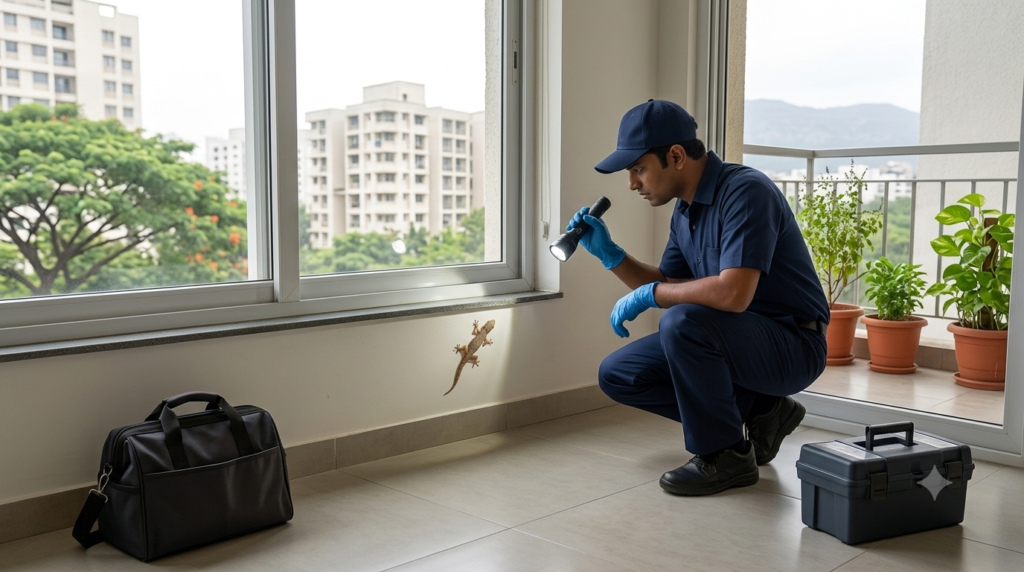
Lizards are commonly seen on walls, ceilings, balconies and near outdoor lights in Pune homes. Although most house geckos are harmless to people and can help control insects, their presence indoors may be uncomfortable for some residents. Droppings, unexpected movement and sightings near kitchens or bedrooms can make homeowners look for effective lizard control solutions.
Lizards usually enter homes in search of insects, shelter and suitable hiding places. Bright outdoor lights can attract insects, which may then attract geckos around windows, balconies and entrances. Small gaps around doors, windows, ventilation openings and utility pipes can also allow lizards to enter.
Effective lizard control in Pune focuses on reducing insect activity, limiting access to the building and managing hiding places. Simply trying to chase away individual lizards may not solve the problem if the conditions attracting them remain unchanged.
In this guide, PestiGo Care explains why lizards enter homes, practical ways to discourage them and when professional pest control may help.
House geckos are well adapted to living around buildings. They often rest on walls and ceilings, especially near lights where insects gather. Pune’s residential buildings, balconies, gardens and outdoor lighting can create suitable conditions for these reptiles.
Common reasons for lizards appearing indoors include:
Lizards are generally more interested in finding food and shelter than in approaching people. Seeing one occasionally does not necessarily indicate an infestation, but repeated sightings may suggest easy access to insects or multiple entry points.
Most common house geckos are not dangerous to people and generally avoid human contact. They can also consume insects such as moths and flies.
However, there are practical reasons why residents may want to keep lizards away from particular areas.
Lizard droppings may accumulate on windowsills, shelves, walls and floors. Surfaces that come into contact with droppings should be cleaned carefully, especially around food preparation and storage areas.
Avoid handling droppings with bare hands, and wash your hands after cleaning.
Lizards can move across different surfaces, and their droppings may contaminate areas where food is prepared or stored. Keep food covered and clean affected surfaces before using them for food preparation.
Some people feel uncomfortable when lizards appear unexpectedly in bedrooms, kitchens or living spaces. This is a valid reason to improve exclusion and prevention measures.
Not every reptile found around a home is a common house gecko. If you encounter an unfamiliar or potentially hazardous species, avoid handling it and seek appropriate local assistance.
In most cases, prevention and humane removal are preferable to killing the animal or using chemicals indiscriminately.
How to Prevent Bed Bugs at Home: Practical Tips for a Comfortable Bedroom
Read this blog
The most practical way to reduce lizard activity is to make your home less attractive to insects and less accessible to reptiles.
Outdoor lights can attract flying insects, which may provide food for geckos. Consider using appropriately positioned, warm-coloured outdoor lighting where suitable, and switch off unnecessary lights when they are not needed.
Keep lighting near open windows and balcony doors under control, especially during evenings when insects may gather.
Changing the lighting alone will not eliminate lizards, but it can reduce one source of attraction.
Fine-mesh screens help prevent insects and small reptiles from entering through open windows. Check screens for tears and ensure doors close properly.
Repair gaps around frames and inspect balcony entrances, ventilation openings and other access points.
Inspect spaces around pipes, cables, door frames and window frames. Seal suitable openings using materials appropriate for the location.
Do not block required ventilation or interfere with electrical systems, drainage or other essential building functions.
Clean kitchen counters, floors and corners regularly to reduce insects and food residues. Empty garbage bins, store food securely and avoid leaving uncovered food overnight.
A cleaner environment can reduce the insects that attract geckos, although ordinary household cleaning will not prevent every insect from entering.
Lizards often hunt insects around lights and sheltered areas. If flies, moths or other insects are common indoors, identify the source and address it.
Depending on the situation, this may involve improving screens, managing waste, reducing standing water or arranging suitable insect control.
Avoid using broad-spectrum pesticides unnecessarily, particularly in areas where children, pets or food are present.
Organise storerooms, cupboards, utility areas and balconies. Remove unnecessary cardboard, unused materials and accumulated debris where practical.
Keep stored items arranged so that corners and entry points can be inspected easily.
Trim vegetation that touches windows or walls, remove accumulated debris and inspect areas around outdoor lights.
If insects gather around balcony plants or standing water, address the underlying issue. Plants themselves do not automatically cause a lizard problem, but nearby insect activity can make the area attractive to geckos.
If a lizard enters your home, allow it a clear route to an open exit when practical. Keep children and pets away, avoid grabbing it by the tail, and do not use glue traps or harmful homemade chemical mixtures.
If you are uncomfortable removing it yourself, consider seeking help from an appropriate local professional.
Some areas require additional attention because of hygiene or comfort concerns.
Keep food covered, clean counters, seal food packets and inspect gaps around windows, exhaust openings and pipes. Clean any droppings carefully before preparing food.
Repair window screens, close gaps around doors and reduce insects attracted by unnecessary lighting. Check curtains and window frames if lizards are repeatedly spotted in the same location.
Inspect ventilation openings, window frames and gaps around plumbing. Keep the area clean and address persistent insect activity or moisture problems.
Check doors and screens, manage outdoor lighting and remove debris that can provide hiding places. If the balcony is close to a garden or exterior wall, inspect the surrounding area for insect activity.
How to Get Rid of Cockroaches at Home: Complete Cockroach Control Guide | PestiGo Pest Control
Read this blog
The appropriate approach depends on how frequently lizards appear and what is attracting them.
Exclusion means reducing access to the building by repairing screens, sealing suitable gaps and improving door closures. This is often one of the most useful long-term approaches.
Reducing the insects that serve as food can make an area less attractive to geckos. The specific steps depend on the insects present and their source.
Keeping storage areas organised, maintaining balconies and reducing unnecessary clutter can limit suitable hiding places.
An individual lizard can sometimes be guided toward an exit without direct handling. Avoid injuring it or using harmful substances.
If lizards appear repeatedly across several rooms, a pest control professional may help identify insect activity and entry points contributing to the problem.
It is important to understand that routine insecticide spraying does not necessarily repel or remove lizards. Treatment should address the actual cause of the activity, and any chemical product should be used only for its labelled purpose.
Professional assistance may be useful when repeated sightings occur despite basic prevention measures or when the entry points are difficult to identify.
A suitable assessment may include:
Because lizards are reptiles rather than insects, the most useful service may involve exclusion and insect management instead of conventional insecticide application alone.
When contacting a provider, ask what the proposed service actually includes and whether structural repairs or sealing work are charged separately.
The cost depends on the property and the type of assistance required. There is no single price that applies to every home.
Factors that may affect the quotation include:
Request a clear quotation before booking. Confirm which services are included, whether repairs cost extra and what preventive measures are recommended.
Before choosing a provider in Pune, consider these points:
PestiGo Care can help customers discuss their pest control concerns and identify suitable services based on the conditions at their property.
Many house geckos are active during the evening or night and may hunt insects near lights. Open windows, gaps and accessible insects can make a home attractive to them.
Not necessarily. Lizards may enter clean homes while searching for insects or shelter. However, unmanaged waste, insect activity and clutter can make some areas more attractive.
Ordinary insecticides are designed for specific target pests and should not be used on lizards unless a product is explicitly approved for that purpose. Reducing insect activity and sealing entry points are generally more appropriate prevention measures.
Keep people and pets away and provide a clear exit route if it is safe to do so. Avoid grabbing the animal or using adhesive traps. Seek appropriate assistance if you cannot remove it safely.
Small reptiles may enter through accessible openings, depending on their size and the design of the building. Suitable mesh screens can help, provided they do not obstruct required ventilation.
Yes. Many house geckos eat insects and spiders. Although they may be useful around outdoor areas, residents can still take humane steps to keep them out of kitchens, bedrooms and other indoor spaces.
A combination of sealing entry points, maintaining window screens, reducing insect activity and managing outdoor lighting is generally more useful than relying on a single repellent or spray.
Lizards commonly enter homes while looking for insects, shelter and accessible hiding places. Although many house geckos are harmless and help consume insects, repeated indoor sightings can be uncomfortable for residents.
The most practical prevention strategy is to reduce insect activity, repair screens, seal suitable gaps and maintain clean, organised surroundings. If lizards continue appearing, a professional assessment can help identify the conditions contributing to the problem.
Looking for pest control support in Pune? Contact PestiGo Care to discuss your concerns and explore appropriate prevention and treatment options for your home or business.