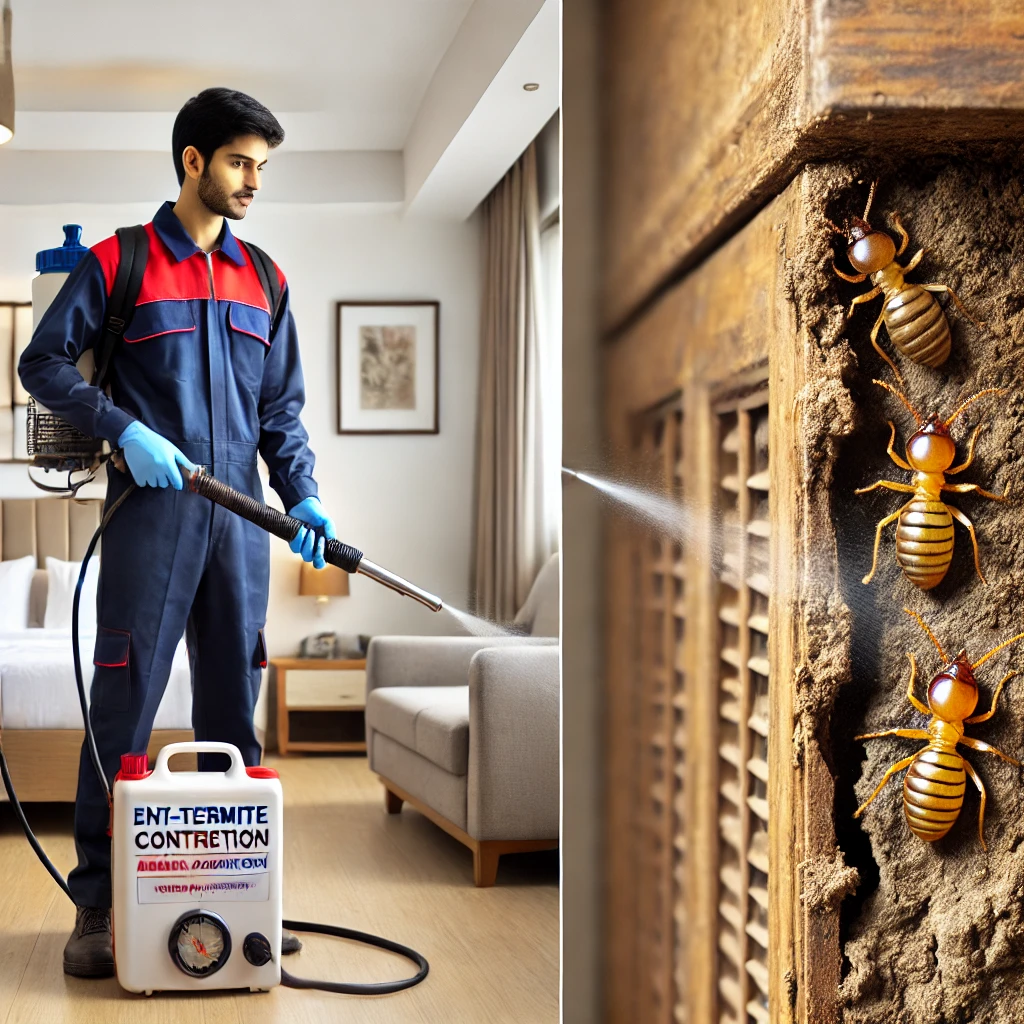
Termites can cause serious damage to wooden furniture, doors, flooring and other parts of a property if an infestation is left untreated. Because termites often remain hidden, many homeowners notice the problem only after visible damage has already occurred.
If you are looking for termite control in Pune, professional inspection and timely treatment can help identify termite activity and protect your property from further damage.
In this complete guide, we explain how to identify termites, common signs of infestation, how termite treatment works, how to prevent termites and when you should contact a professional termite control service.
Termites are small insects that feed primarily on cellulose-containing materials such as wood and other plant-based materials. They live in colonies and can remain hidden inside soil, walls, wooden structures and other concealed areas.
Unlike some pests that are easy to spot, termites can continue damaging a property without being noticed for a long time.
This is why regular inspection and early detection are important, particularly for properties with wooden structures or a history of termite activity.
One of the most common questions homeowners ask is: “How do I know if I have termites?”
Look for these common termite infestation signs:
Not every damaged wooden surface is necessarily caused by termites. A professional inspection can help determine whether termites are responsible.
Termites can gradually weaken wooden structures and other cellulose-based materials.
If termite activity continues for an extended period, it may affect:
The extent of damage depends on the termite species, colony size, duration of infestation and materials available to the colony.
Early detection can make termite management easier and may help reduce the risk of extensive property damage.
If you discover termite activity, simply removing visible termites may not solve the problem. Termites live in colonies, and much of the colony may be hidden.
Effective termite management generally involves:
The first step is identifying signs of termite activity and determining where termites may be entering or nesting.
A professional technician may inspect wooden structures, walls, flooring, soil contact areas and other locations depending on the property.
Different termite infestations may require different approaches.
The treatment plan can depend on whether termites are associated with soil, wooden structures or other areas of the property.
The treatment method is selected based on the infestation, property structure and areas affected.
Professional termite management may involve targeted treatment of affected areas, soil treatment, drilling and treatment of suitable structural areas, baiting or other appropriate methods.
The objective should not simply be to kill the termites that are visible.
The treatment should address termite activity and potential pathways that allow termites to enter or spread through the property.
Depending on the infestation, follow-up inspection or treatment may be recommended.
Homeowners should also address conditions that can encourage termite activity, such as moisture problems, wood-to-soil contact and untreated entry points.
There is no single termite treatment that is best for every property.
The appropriate solution depends on factors such as:
Professional termite control services can assess these factors before recommending a treatment.
For this reason, homeowners should be cautious about choosing a treatment simply because it is advertised as the “strongest” or cheapest option.
If you notice signs of termite activity, professional termite treatment in Pune can help identify and manage the infestation.
A professional service typically begins with an inspection rather than immediately applying treatment everywhere.
Depending on the property, technicians may inspect:
The treatment is then planned according to the findings.
Residential properties can be vulnerable to termites because they often contain wooden furniture, doors, cabinets and other cellulose-based materials.
Residential termite control in Pune may be required for:
If termites are detected early, professional treatment can help prevent the infestation from spreading further.
Homeowners should also regularly inspect areas that are dark, damp or difficult to access.

Termite prevention can begin before a building is completed.
Pre-construction termite treatment is designed to reduce the risk of termite entry through soil and vulnerable structural areas.
It may be considered during construction for:
The exact treatment process should be designed according to the building construction and applicable professional recommendations.
For an existing property, a different termite management approach may be required.
Existing buildings with termite activity may require post-construction termite treatment.
The treatment approach depends on where termite activity is found and how the building is constructed.
Depending on the situation, professional treatment may involve suitable applications around affected structural areas, soil, walls or other potential termite pathways.
Because drilling or structural treatment may be involved in some situations, the technician should first assess the property and explain the proposed treatment.
A common question is: “How long does termite treatment last?”
There is no universal duration that applies to every termite treatment.
The effectiveness and longevity of treatment can depend on:
Some professional treatments are designed to provide long-term protection, while properties may still require periodic inspection and maintenance.
Ask your pest control provider about the expected protection period and whether follow-up inspections are recommended for your specific treatment.
Yes, termites can potentially return after treatment.
Treatment can manage an existing infestation, but new termite activity may occur if termites gain access to the property again.
Factors that can contribute to recurring termite activity include:
This is why prevention and periodic inspection are important even after professional treatment.
Professional treatment should be combined with good property maintenance.
Here are some practical termite damage prevention measures:
Repair leaking pipes, taps and drainage issues. Damp areas can create favourable conditions for some termite activity.
Where practical, avoid allowing untreated wooden structures to remain directly in contact with soil.
Regularly check doors, window frames, furniture, cabinets and other wooden components for signs of damage.
Address water accumulation and drainage problems around the property.
Avoid storing large amounts of cardboard, paper or unused wooden materials in damp or poorly ventilated locations.
Where practical, repair cracks and openings that may provide access to concealed areas.
If your property has a history of termite activity, periodic professional inspection can help identify new activity earlier.
Many homeowners search online for ways to eliminate termites themselves.
DIY products may be useful for limited pest issues, but termite infestations can be difficult to locate because much of the colony may remain hidden.
| DIY Approach | Professional Termite Control |
|---|---|
| Usually focuses on visible activity | Investigates the source and extent |
| Limited property inspection | Detailed inspection |
| May provide temporary control | Treatment planned for the infestation |
| Difficult to identify hidden colonies | Technician assesses concealed areas |
| Homeowner determines treatment | Professional recommends an appropriate method |
If you have visible termite damage or repeated termite activity, professional assessment is generally a better option than repeatedly treating only the visible insects.
The termite treatment cost in Pune depends on several factors.
These may include:
Because properties differ significantly, there is no single price that applies to every termite treatment.
Before booking, ask the pest control provider for a clear quotation explaining what areas are covered, what treatment is included and whether follow-up visits are required.
When searching for the best termite control in Pune, do not compare companies based only on price.
Consider the following:
Choose a provider with experience dealing with termite infestations in residential and commercial properties.
A good termite control service should assess the property before recommending treatment.
Ask for a clear quotation and understand what is included.
The technician should explain the recommended treatment and why it is suitable for your property.
Ask about preparation requirements and precautions for residents, children and pets.
Find out whether the service includes follow-up inspection or treatment and what conditions apply.
Reviews can provide insight into service quality, professionalism and customer experience.
You should consider professional termite inspection if you notice:
Do not wait for extensive damage before investigating a suspected infestation.
Common signs include mud tubes, hollow or damaged wood, discarded wings, small holes and other unexplained damage to wooden structures. A professional inspection can confirm whether termites are responsible.
There is no universal treatment that can guarantee termites will never return. Professional termite treatment can manage an existing infestation, while prevention, property maintenance and periodic inspections can help reduce the risk of future termite activity.
The best treatment depends on the type of termite, property construction, infestation location and severity. A professional inspection is recommended before selecting a treatment method.
The protection period depends on the treatment method, property conditions and environmental factors. Ask your pest control provider how long the specific treatment is expected to remain effective and whether periodic inspections are recommended.
Yes. New termite activity can occur if termites find another route into the property or environmental conditions change. Regular inspection and preventive maintenance can help identify recurring activity early.
Termite treatment costs vary according to property size, infestation severity, treatment method and areas affected. A professional assessment is the best way to determine the treatment required and the associated cost.
Professional termite treatment can be carried out with appropriate products and procedures when used according to their instructions. Residents should follow all preparation, safety and re-entry instructions provided by the pest control professional.
Treatment time depends on the size of the property, infestation level, treatment method and number of affected areas. A technician can provide a more accurate estimate after inspecting the property.
Not necessarily. The decision depends on the extent and structural condition of the damage. A professional assessment can help determine whether affected wood requires repair, replacement or monitoring after treatment.
New construction can also be vulnerable to termites. Preventive termite treatment during construction can help reduce potential termite entry through soil and other vulnerable areas.
If you are searching for professional termite control in Pune, PestiGo Care provides pest management solutions for residential and commercial properties.
Our approach begins with understanding the pest problem and assessing the property before recommending an appropriate treatment.
Whether you have noticed termite activity, damaged wooden structures or want to protect your property from potential termite problems, professional inspection can help you understand the situation and choose the right solution.
Contact PestiGo Care today to discuss your termite control requirements in Pune.
Termites can remain hidden while gradually damaging wooden structures and other parts of a property. Recognising early signs such as mud tubes, damaged wood, discarded wings and unexplained structural damage can help you take action sooner.
If you suspect an infestation, professional termite control in Pune can help identify the source of the problem and determine an appropriate treatment.
Along with professional treatment, maintaining dry conditions, addressing moisture problems, inspecting wooden structures and arranging periodic inspections can help reduce the risk of recurring termite activity.
Have you noticed signs of termites at your home or business? Contact PestiGo Care for professional termite inspection and treatment in Pune.