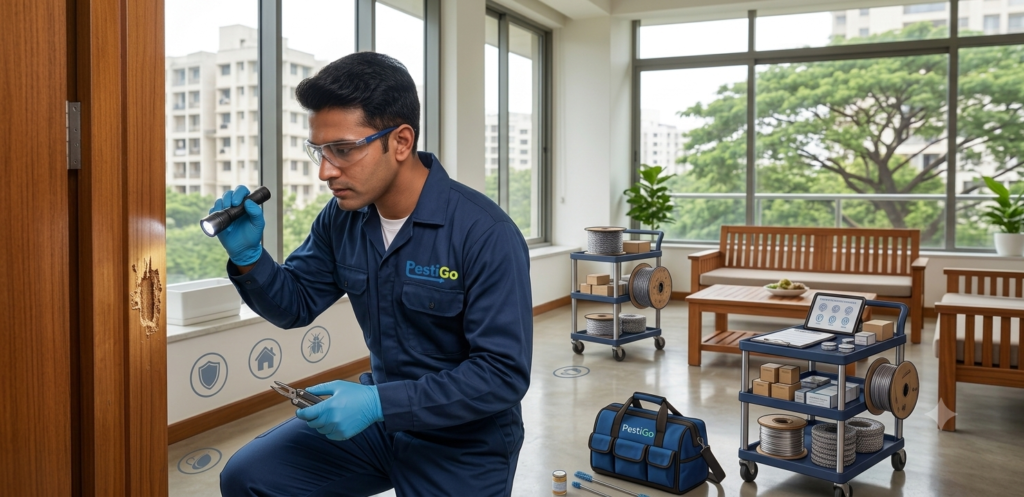
Termites can cause serious damage to wooden furniture, door frames, cupboards and other parts of a property if an infestation goes unnoticed. In Pune, homeowners and property managers should pay attention to early warning signs, particularly in areas affected by moisture, plumbing leaks or poor ventilation. Termite damage is not always visible immediately because these insects can remain hidden inside wood or behind structural surfaces.
If you are searching for termite control in Pune, understanding the signs of termite activity and the available treatment options can help you protect your property. Early inspection and appropriate treatment can reduce the risk of extensive damage and help identify the source of the problem.
This guide explains how to identify termites, what attracts them, how professional termite treatment works and how to prevent future infestations.
Termites are insects that feed on cellulose, a material found in wood, paper and other plant-based products. Some termite species live in soil and construct mud tubes to reach food sources, while others can establish colonies in wood.
Unlike pests that are mainly a nuisance, termites can damage structural timber, furniture, wooden flooring, cupboards and door frames. Because they often feed inside materials, visible damage may appear only after an infestation has developed.
Termite activity can occur in residential buildings, offices, shops and other properties. Wooden materials that remain damp or come into contact with soil may be particularly vulnerable under suitable conditions.
Regular inspection and prompt action are important when termite activity is suspected.
Recognising the early signs of termites can help you arrange an inspection before the damage becomes more extensive.
Wooden furniture, door frames and other timber structures may sound hollow when tapped if termites have consumed material inside them. The outer surface can sometimes look relatively normal even when the inside has been damaged.
Do not assume that every hollow wooden surface indicates termites. Other forms of deterioration can produce similar symptoms, so professional identification may be necessary.
Some termites build narrow mud tubes along walls, foundations, pipes and other surfaces. These tubes help them travel between their colony and food sources while protecting them from exposure.
If you notice mud-like tunnels on walls or near wooden structures, avoid destroying all the evidence before an inspection. A pest control professional can examine the area to determine whether termite activity is present.
Some reproductive termites swarm and shed their wings after landing. Small piles of discarded wings near windows, doors or other light sources can indicate possible termite activity nearby.
Discarded wings alone do not confirm an active infestation, but they should be investigated when accompanied by other signs.
Termite damage can sometimes cause wood to appear blistered, uneven or damaged beneath the surface. Paint may crack or surfaces may deteriorate when the underlying material has been affected.
Moisture damage can produce similar changes. An inspection can help establish the cause and determine whether treatment is required.
Wooden doors and window frames can swell or become difficult to operate because of humidity, water exposure or structural changes. Termite damage is another possible cause when other warning signs are present.
If a frame shows unusual deterioration, inspect it for mud tubes, damaged wood or other signs of insect activity rather than assuming that termites are responsible.
Why Professional Pest Control Is Important for Homes and Businesses
Read this blog
Several property conditions can increase the risk of termite activity. Understanding these factors helps homeowners take preventive measures.
Leaking pipes, damp walls, roof seepage and poorly drained outdoor areas can create conditions favourable to certain termites. Persistent moisture can also damage wood and make it more vulnerable to deterioration.
Repair plumbing leaks promptly and investigate damp areas rather than covering them without addressing the source.
Untreated wooden structures that contact soil can provide termites with access to food. Wooden debris, discarded timber and other cellulose-containing materials near building foundations may also attract termite activity.
Where practical, maintain appropriate separation between soil and vulnerable wooden components.
Cracks in foundations, gaps around utility pipes and structural openings can provide access routes for some termites. Inspecting these areas and sealing suitable openings can help reduce access, although sealing alone will not eliminate an established colony.
Cardboard, paper, wooden boxes and other cellulose-based materials stored in damp areas can attract certain termite species. Keep storage spaces dry and organised, and avoid placing cardboard directly on damp floors.
Prevention starts with reducing conditions that support termite activity and identifying warning signs early.
Inspect bathrooms, kitchens, utility rooms and areas beneath sinks for leaks. Repair damaged plumbing and address water seepage around walls, roofs and windows.
Reducing persistent moisture helps protect wooden materials and can make the property less favourable to some termite species.
Check cupboards, bed frames, door frames, wooden flooring and storage furniture for unusual damage. Pay particular attention to areas that are rarely moved or inspected.
If you discover suspicious holes, hollow areas or mud tubes, arrange a professional assessment rather than relying solely on surface cleaning.
Store cardboard boxes, paper and wooden materials in dry, well-maintained spaces. Improve ventilation where needed and avoid allowing water to collect near storage areas.
Remove unnecessary wooden debris from around the building and maintain suitable clearance between vulnerable materials and soil.
Inspect gaps around plumbing installations, foundations and other structural openings. Seal appropriate openings as part of general building maintenance.
However, do not assume that sealing visible cracks will eliminate termites already inside a structure. An established infestation may require targeted treatment.
Periodic inspection can help identify early signs of termite activity, particularly in properties with substantial wooden structures or a history of termite problems.
The appropriate inspection frequency depends on the property’s condition, construction, previous infestation history and local risk factors.
How to Choose the Best Pest Control Services in Pune
Read this blog
Professional termite control begins with identifying the suspected pest and assessing the affected areas. The technician may examine wooden structures, foundations, accessible wall surfaces, moisture sources and other locations where termites could be active.
Based on the findings, the provider can recommend a suitable treatment plan.
An inspection helps identify visible signs of activity, assess potential damage and determine which areas may need further investigation.
The technician may also recommend correcting leaks, improving drainage or removing vulnerable materials that contribute to the problem.
Depending on the termite species and infestation location, treatment may involve suitable termiticides, baiting systems or other specialised methods. The choice of treatment depends on the property and the nature of the infestation.
A surface spray alone may not eliminate a colony hidden inside wood or soil. Ask the provider to explain the proposed treatment, its limitations and whether follow-up inspections are recommended.
Preventive measures may include appropriate treatment of vulnerable areas during construction or renovation, monitoring for termite activity and correcting building conditions that increase risk.
For an existing property, the best approach depends on its construction, previous treatment history and inspection findings.
The cost of termite treatment in Pune varies according to several factors, including the size of the property, termite species, infestation severity, treatment method and accessibility of affected areas.
A limited problem involving a small piece of furniture may require a different approach from an infestation affecting multiple rooms or structural timber.
Before booking a service, request a quotation that explains what is included. Ask whether the price covers inspection, treatment, follow-up visits and any applicable warranty conditions.
Do not compare quotations on price alone. The recommended treatment, scope of work, safety precautions and aftercare instructions are also important when choosing a provider.
Selecting an appropriate pest control provider can help you understand the problem and choose a suitable treatment.
Before booking, consider the following points:
Residents in areas such as Wakad, Baner, Hinjewadi, Kothrud, Hadapsar and Kharadi should confirm service availability directly with their chosen provider. Coverage should not be assumed based on the neighbourhood name alone.
PestiGo Care can be contacted to discuss termite control requirements and confirm the availability of the relevant service in your area.
Possible signs include mud tubes, hollow or damaged wood, discarded wings and unexplained deterioration of wooden structures. These signs are not always conclusive, so a professional inspection can help confirm the cause.
Yes. Termites feed on cellulose-containing materials and can damage cupboards, beds, door frames, wooden furniture and other timber products. The extent of damage depends on the termite species, duration of activity and affected material.
Rain does not automatically cause a termite infestation, but moisture and suitable environmental conditions can influence termite activity. Some reproductive termites also swarm seasonally. Repairing leaks and addressing damp areas can help reduce risk.
Home remedies may not reach a hidden colony or address the source of an infestation. If you find signs of termite activity, a professional assessment is more reliable than depending on unverified remedies.
The time required depends on the treatment method, property size, infestation severity and accessibility of affected areas. Ask the provider about the expected duration and whether additional visits or monitoring are required.
Safety depends on the products used, their application and compliance with the treatment instructions. Inform the provider about children, pets and other household conditions before work begins, and follow all instructions concerning access and re-entry.
Termites may return if the underlying risk remains, new colonies gain access or the original treatment does not fully resolve the problem. Follow-up monitoring, moisture control, suitable building maintenance and any recommended preventive measures can help reduce the risk.
Termites can cause damage before an infestation becomes obvious, making early identification and appropriate treatment important. Regular inspection, moisture control and proper building maintenance can help reduce the risk, but suspected infestations should be assessed carefully.
If you notice mud tubes, damaged wooden structures or other possible signs of termite activity, contact PestiGo Care to discuss your requirements and confirm service availability in Pune.
Choosing a suitable treatment based on the actual infestation can help protect wooden structures, reduce the risk of further damage and support long-term property maintenance.