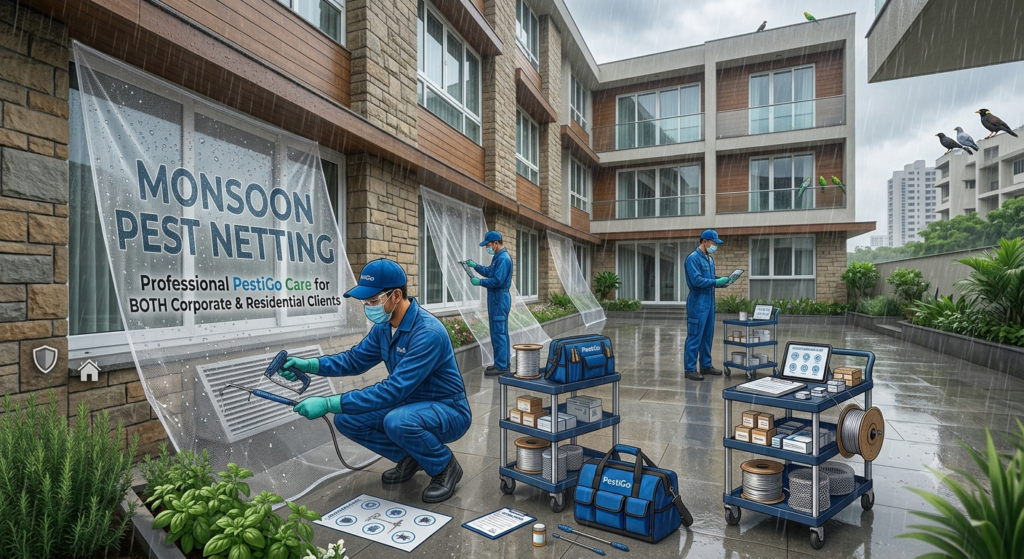
Pune experiences seasonal rainfall that can create favourable conditions for several common household pests. During the monsoon, increased moisture, stagnant water and damp areas can attract cockroaches, mosquitoes, ants, termites and rodents. These pests can become a nuisance in residential apartments, independent houses, offices, restaurants and commercial buildings. Taking preventive measures early can help reduce pest activity and maintain a clean and comfortable indoor environment.
Monsoon pest control in Pune is particularly important for properties with leaking pipes, poorly ventilated rooms, open drains and areas where rainwater collects. Regular cleaning and moisture management can prevent many pest problems, but established infestations may require professional treatment.
In this guide, we explain why pests become more noticeable during the rainy season, which pests commonly affect Pune homes and what you can do to prevent them.
Rainfall changes the conditions in which insects and rodents live. Heavy rain can disturb insect habitats and encourage pests to seek shelter in dry areas, including homes and commercial buildings. Moisture also creates favourable conditions for certain insects, while standing water can provide mosquito breeding sites.
In Pune, residential properties may experience pest problems because of damp walls, leaking plumbing, uncovered garbage, accumulated water on balconies and gaps around doors or windows. Buildings with shared drainage systems and common waste disposal areas may also need regular maintenance to reduce pest activity.
Several factors can contribute to monsoon pest infestations:
Identifying these problems early helps homeowners take appropriate preventive action before pest activity becomes difficult to manage.
7 Effective Pest Control Tips to Keep Your Home Clean and Pest-Free
Read this blog
Cockroaches are among the common household pests found in kitchens, bathrooms, cupboards and drainage areas. They can enter buildings through small gaps, plumbing openings and other access points. They are attracted to food residues, water and sheltered spaces.
Cockroach activity may become particularly noticeable when pests find suitable indoor hiding places. Their droppings and body parts can contaminate surfaces and may trigger allergic reactions in sensitive individuals.
To reduce cockroach activity, clean kitchen counters regularly, store food in sealed containers, remove garbage frequently and repair leaking taps. Avoid leaving dirty dishes overnight, and inspect gaps around sinks and drainage pipes. If cockroaches continue appearing despite these measures, professional cockroach control may be appropriate.
Mosquitoes are a major concern during the rainy season because some species breed in stagnant water. Water can accumulate in plant trays, buckets, discarded tyres, roof gutters and uncovered outdoor containers.
Mosquito prevention requires more than using repellents indoors. Check the surroundings of your property regularly and remove unnecessary water-holding containers. Empty plant saucers, maintain drainage areas and cover water storage containers appropriately.
If mosquito activity remains high, inspect nearby breeding sources and follow local public health guidance. Professional mosquito management may help address certain property-related problems, but eliminating breeding sites remains an important preventive measure.
Termites can damage wooden furniture, door frames, cupboards and other cellulose-containing materials. Damp conditions and moisture problems can increase concerns about termite activity, although termite infestations can occur in dry weather as well.
Warning signs may include hollow-sounding wood, damaged wooden surfaces, mud tubes, discarded wings or unexplained deterioration around wooden structures. Some termite infestations remain hidden until substantial damage has occurred.
Inspect wooden furniture and vulnerable structural areas periodically. Repair water leaks, improve ventilation and avoid allowing wooden materials to remain in contact with damp soil. If you suspect termites, arrange a professional inspection before attempting treatment because the appropriate method depends on the termite species, infestation location and extent of damage.
Ants may enter homes during rainy weather in search of food and shelter. Kitchens, pantries, balconies and storage areas can attract them when food crumbs, sugary spills or accessible waste are present.
Wiping surfaces, storing food securely and cleaning spills promptly can reduce the resources available to ants. Check windows, door frames and wall openings for possible entry points.
If ants repeatedly return, identifying their entry route and nesting location can be more effective than treating only the visible ants. A suitable pest control treatment may be necessary when the infestation persists.
Rats and mice may seek shelter inside buildings when outdoor conditions become unfavourable. They can enter through openings around pipes, damaged vents, doors and gaps in walls. Accessible food waste and clutter can make a property more attractive to rodents.
Rodents can damage stored goods, wiring and building materials. They may also contaminate food preparation and storage areas.
Keep garbage covered, store food securely and remove unnecessary clutter. Seal suitable entry points with rodent-resistant materials, and avoid handling rodent droppings without appropriate precautions. Persistent rodent activity may require professional inspection and an integrated control plan.
One of the most important steps in mosquito prevention is eliminating stagnant water. Inspect balconies, terraces, gardens, plant trays, buckets and other containers after rainfall.
Empty unnecessary containers and clean areas where water regularly accumulates. Ensure that roof gutters and drainage channels are maintained so rainwater can flow away properly.
For properties with water storage tanks, make sure containers are appropriately covered and maintained. If water collects in common areas, inform the housing society or property manager so the source can be addressed.
Food residues and moisture can attract cockroaches, ants and other pests. Clean countertops, cooking areas and floors regularly, particularly after preparing meals.
Store grains, snacks and other dry foods in sealed containers. Clean food spills promptly and avoid leaving uncovered food on kitchen counters overnight. Empty garbage bins regularly and wash them when necessary.
Pay attention to areas under refrigerators, behind appliances and beneath kitchen cabinets, where crumbs and moisture may accumulate unnoticed. Repair leaking taps and check the spaces around sink pipes.
A clean kitchen does not guarantee that pests will never appear, but it reduces the food and water sources that allow many household pests to thrive.
Leaking taps, damaged plumbing, roof seepage and damp walls can create conditions that attract certain pests. During the monsoon, inspect ceilings, bathrooms, utility areas and under-sink cabinets for signs of moisture.
Repair plumbing problems promptly and improve ventilation in rooms that remain damp. Use suitable ventilation systems where necessary and investigate persistent damp patches rather than covering them with paint alone.
If moisture comes from structural damage or external water seepage, address the underlying cause. Pest treatments alone will not solve a continuing moisture problem.
Small gaps around windows, doors, pipes and utility installations can allow insects and rodents to enter a building. Inspect these areas, especially where plumbing enters walls or cabinets.
Use appropriate sealants for suitable cracks and install door sweeps or screens where needed. Ensure that ventilation openings have suitable protective mesh without obstructing necessary airflow.
For shared apartment buildings, coordinate with the property manager or housing society to address gaps in common areas, drainage access points and damaged screens.
Unmanaged waste can attract cockroaches, ants, flies and rodents. During the rainy season, wet garbage can also create unpleasant odours and sanitation problems.
Use covered bins, separate waste according to local requirements and dispose of garbage regularly. Clean waste containers when necessary and avoid allowing rubbish to accumulate near entrances, balconies or building service areas.
Housing societies should maintain designated waste collection areas and arrange timely removal. Keeping common spaces clean can support individual household pest prevention efforts.
How to Get Rid of Cockroaches in the Kitchen: Complete Guide
Read this blog
Damp storage rooms, cupboards and poorly ventilated spaces should be checked periodically. Look for signs of termite damage, ant activity and other pest-related problems.
Avoid placing cardboard boxes directly on damp floors. Keep storage areas organised so that walls, corners and wooden structures can be inspected easily.
If wooden furniture becomes wet, dry it appropriately and investigate the cause of the moisture. Do not assume that every damaged wooden surface indicates termites; water damage and other causes can produce similar symptoms.
If you notice mud tubes, discarded wings or suspicious internal wood damage, contact a qualified pest control professional for assessment.
Preventive cleaning and repairs are important, but they may not eliminate an established infestation. Professional pest control can help identify the pest species, locate likely hiding places and determine an appropriate treatment method.
The correct approach depends on the pest involved. Cockroach treatment, mosquito management, termite control and rodent control require different techniques and preventive measures.
Before booking a service, explain where pests have been seen, how frequently they appear and whether previous treatments have been attempted. Ask about the treatment method, preparation requirements, safety precautions and any follow-up visits that may be recommended.
Always follow the technician’s instructions, particularly regarding children, pets, food preparation areas and re-entry after treatment.
Pest prevention in apartment complexes requires cooperation between residents and property management. Even when an individual flat is clean, pests may enter from common drainage systems, garbage collection areas, gardens or neighbouring spaces.
Housing societies can reduce pest risks by maintaining drainage systems, removing stagnant water, keeping waste collection points clean and repairing damaged building infrastructure.
Residents should report recurring cockroach activity, mosquito breeding sites, rodent sightings and suspected termite damage to the appropriate management team. Coordinated action can be more effective than treating individual flats without addressing the wider source of the problem.
Apartment managers should also arrange appropriate inspections of common areas and communicate any treatment precautions to residents in advance.
For commercial properties such as restaurants, offices and shops, regular sanitation, secure food storage and documented pest management procedures are particularly important.
You should consider professional pest control when preventive steps are not resolving the problem or when you notice signs of a potentially established infestation.
Common warning signs include recurring cockroach sightings, repeated rodent activity, suspected termite damage, persistent mosquito problems and pests appearing in multiple rooms.
Professional assessment is also advisable when you cannot identify the source of the infestation or when pest activity continues after previous treatment.
When selecting a pest control provider, ask about the service coverage, inspection process, recommended treatment, safety instructions and follow-up support. Choose a treatment appropriate for your property rather than assuming that one method works for every pest.
PestiGo Care can be contacted to discuss pest control requirements in Pune. Confirm the availability of the relevant service in your area and request details about the recommended approach before booking.
Rain can disturb outdoor pest habitats and encourage insects and rodents to seek shelter inside buildings. Increased moisture, stagnant water, accessible food and small entry points can also contribute to pest activity.
Keep kitchen surfaces clean, store food in sealed containers, remove garbage regularly and repair leaking pipes. Seal suitable gaps around plumbing and use appropriate cockroach control products according to their labels. Persistent infestations may require professional treatment.
Remove stagnant water from plant trays, buckets, discarded containers and other water-holding areas. Keep water storage containers covered and maintain drainage systems. For larger or persistent problems, identify breeding sources and follow local public health recommendations.
Not every property needs professional treatment. However, recurring infestations, suspected termite activity, persistent rodent problems and pest activity that continues despite preventive measures may require professional assessment.
Repair leaks, reduce dampness, maintain ventilation and inspect wooden furniture for signs of damage. If you suspect termites, arrange a professional inspection because the appropriate treatment depends on the location and extent of the infestation.
The recommended frequency depends on the pest species, infestation level, property conditions and treatment method. Follow the provider’s advice and arrange additional inspections if pest activity returns.
Regular cleaning reduces food sources and hiding opportunities, but it cannot prevent every infestation. Pests may still enter through drains, structural gaps or nearby breeding sites. Effective prevention combines sanitation, moisture management, building maintenance and appropriate pest control when needed.
Monsoon pest prevention begins with practical steps such as removing stagnant water, maintaining clean kitchens, repairing leaks and sealing entry points. These measures can reduce conditions that attract common household pests, but recurring infestations may require a more targeted approach.
If you are experiencing cockroach, mosquito, termite or rodent problems, contact PestiGo Care to discuss your requirements and confirm the services available in your part of Pune.
Taking timely action can help protect your property, maintain better hygiene and reduce the risk of recurring pest problems throughout the rainy season.