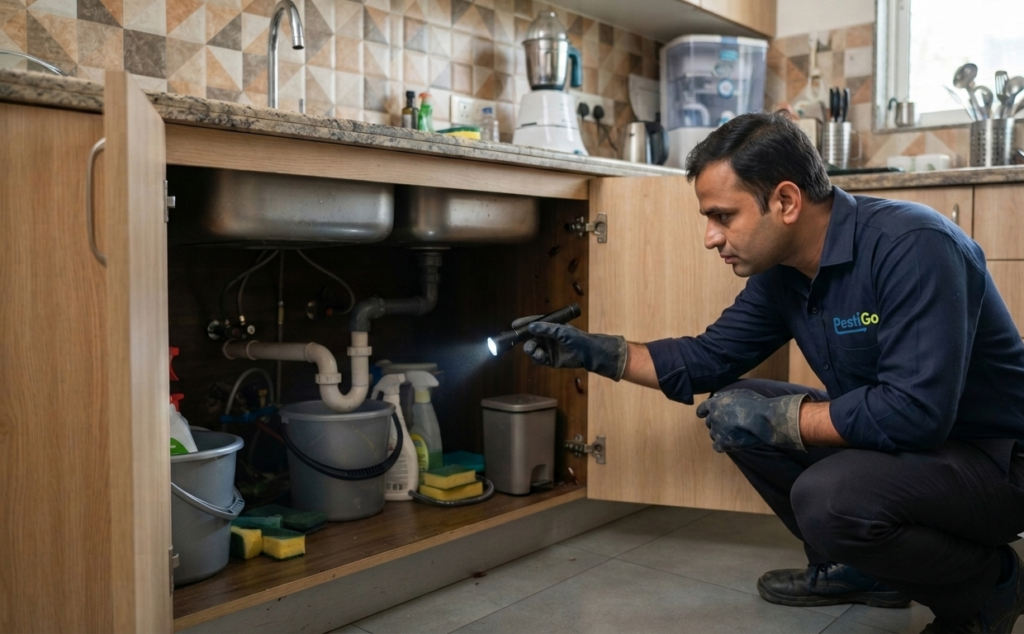
Cockroaches are among the most common household pests, and finding them in your kitchen, bathroom or storage areas can be unpleasant. They are particularly troublesome because they hide in small spaces, come out when the surroundings are quiet and can survive in different indoor environments.
In Pune, cockroach problems can occur in apartments, independent houses, offices, restaurants and commercial buildings. Warm conditions, accessible food, moisture and hidden spaces can make properties suitable for cockroach activity.
Seeing one cockroach may not always mean that you have a major infestation. However, repeated sightings, droppings, egg cases and unpleasant odours can indicate that cockroaches are hiding nearby.
Effective cockroach control in Pune involves more than killing the insects you can see. It requires identifying their hiding places, reducing food and water sources, closing possible entry points and choosing suitable professional treatment when necessary.
This guide explains how cockroach infestations develop, how to prevent them and when to consider professional pest control for your property.
Cockroaches are adaptable insects that can survive in many indoor environments. Homes provide several things they need, including food, water, warmth and protected hiding places.
Some common reasons for cockroach activity in Pune properties include:
Cockroaches can also enter properties through packages, grocery bags, cardboard boxes and gaps around doors or plumbing.
Regular cleaning helps, but an established infestation may require a more targeted approach.
Different cockroach species may be found in residential and commercial environments. Recognising their behaviour can help identify where to look for them.
German cockroaches are commonly associated with indoor infestations, particularly in kitchens and food preparation areas.
They are relatively small and often hide in warm, protected spaces near food and water.
Common hiding places include:
Because they can reproduce quickly, early attention is important when German cockroaches are suspected.
American cockroaches are larger than German cockroaches and may be found around drains, basements, utility areas and damp locations.
They can enter buildings through drainage systems, gaps and openings around plumbing.
They may occasionally appear in bathrooms, kitchens and other areas connected to drainage or moisture sources.
Oriental cockroaches are often associated with damp and cool environments.
They may be found around:
Reducing moisture and maintaining drainage areas can help make these locations less suitable for cockroach activity.
Monsoon Pest Control in Pune: 10 Effective Ways to Protect Your Home
Read this blog
Cockroaches are often active at night, so you may not notice an infestation immediately.
Look for these warning signs around your property.
Cockroaches usually prefer dark and protected spaces. If you frequently see them when switching on kitchen or bathroom lights at night, there may be a hiding population nearby.
Repeated daytime sightings can indicate that cockroaches are being disturbed or that their hiding areas are overcrowded. It is worth arranging an inspection if this happens regularly.
Cockroach droppings may look like tiny dark specks or coffee-ground-like material, depending on the species.
Check cabinet corners, drawers, shelves and areas beneath appliances.
Cockroach egg cases, also called oothecae, contain eggs. Their appearance varies by species.
Finding egg cases in kitchen cabinets, storage spaces or cracks may indicate nearby breeding activity.
A persistent musty or unpleasant odour in areas with cockroach activity may be another warning sign, especially when the infestation is established.
Cockroaches shed their outer skin as they grow. Finding shed skins in hidden areas can indicate ongoing activity.
If cockroaches appear around food containers, kitchen shelves or pantry spaces, inspect the surrounding cabinets and nearby gaps.
Sinks and plumbing areas provide moisture and may contain gaps where cockroaches can hide.
Check beneath kitchen and bathroom sinks.
Refrigerators, ovens and other appliances can provide warm, protected hiding places.
Inspect accessible spaces behind and beneath them.
Cockroach activity in several rooms may indicate a larger problem or movement through plumbing and structural openings.
A professional inspection can help identify the affected areas.
Prevention is one of the most important parts of long-term cockroach management.
Here are practical steps you can follow.
Food crumbs, grease and spilled liquids can attract cockroaches.
Clean kitchen counters after preparing food, wipe cooking surfaces regularly and avoid leaving food residue overnight.
Pay attention to corners and spaces around kitchen appliances.
Keep grains, snacks, flour, cereals and other food products in tightly closed containers.
Avoid leaving open packets in cupboards or on countertops.
Proper storage reduces access to food and makes pantry inspections easier.
Food waste can attract cockroaches, particularly when bins remain open overnight.
Use bins with secure lids and empty them regularly. Clean the inside of bins when food residue accumulates.
Cockroaches need water to survive. Leaking taps, damp pipes and wet spaces beneath sinks can provide a reliable moisture source.
Repair plumbing problems and keep these areas as dry as practical.
Food particles and grease may collect behind refrigerators, ovens and other appliances.
Clean accessible spaces regularly, taking care to follow appliance safety instructions before moving or cleaning electrical equipment.
Food residue and organic buildup around drains may contribute to an environment that attracts pests.
Keep sink areas clean and address slow drainage or plumbing problems promptly.
Small openings around walls, cabinets, doors and pipes may provide hiding places or entry routes.
Where practical, seal suitable gaps with appropriate materials.
For larger plumbing or structural openings, arrange proper repairs rather than using temporary coverings.
Cardboard boxes and piles of paper can provide protected hiding spaces.
Avoid storing unnecessary boxes for long periods, especially in kitchens, utility areas and damp storage spaces.
Cockroaches may hide around bathroom plumbing and damp corners.
Repair leaks, clean drains and improve ventilation where possible.
Cockroaches or egg cases may occasionally enter through stored packaging.
Inspect cardboard boxes and grocery bags before placing them in kitchen cupboards.
Dispose of unnecessary packaging promptly.
Cockroach activity in an apartment may be connected to shared spaces.
Housing societies should maintain:
Residents should report recurring cockroach sightings to building management.
Using multiple insect sprays without understanding the infestation can be ineffective and may create unnecessary exposure.
Always follow product-label instructions. Avoid applying pesticides near food, utensils or surfaces used for food preparation unless the product is specifically approved for that use.
If cockroach activity continues, consider professional assessment.
Many people clean their homes, use insect sprays and still find cockroaches returning.
This can happen because the visible insects are only a small part of the problem.
Some possible reasons include:
Long-term cockroach management should address both the existing infestation and the conditions that allow cockroaches to survive.
Apartment buildings can be particularly challenging because cockroaches may move between units through plumbing openings, drainage systems and structural gaps.
Even if one resident maintains a clean home, cockroaches may enter from common areas or neighbouring flats.
For better apartment cockroach prevention:
If multiple apartments are affected, coordination with the housing society may help address shared sources of the problem.
Mosquito Control at Home: 10 Effective Ways to Prevent Mosquito Breeding
Read this blog
Cockroaches are especially concerning in restaurants, cafes, hotels and food-related businesses.
Their presence can create hygiene concerns and negatively affect customer confidence.
Commercial kitchens should follow consistent cleaning and monitoring practices.
Important preventive steps include:
For commercial premises, a planned pest management programme may be more effective than waiting until cockroach activity becomes visible to customers.
Professional cockroach control generally begins with an inspection to understand the infestation and identify important activity areas.
The treatment method depends on the property, cockroach species, severity and affected locations.
A typical process may include the following stages.
The technician checks areas where cockroaches are frequently seen.
This may include kitchen cabinets, under-sink spaces, appliance gaps, drains and utility areas.
The inspection helps identify possible hiding and movement areas, along with conditions such as moisture, food residue and structural gaps.
The appropriate treatment is selected based on the infestation.
Depending on the situation, professional methods may include targeted gel applications, suitable residual treatments or crack-and-crevice treatment.
Not every method is appropriate for every property.
The technician applies the selected treatment to suitable areas while following product instructions and safety precautions.
The technician may recommend cleaning, food storage, plumbing repairs and other steps to reduce the risk of recurring activity.
Some infestations may require monitoring or follow-up treatment depending on their severity and the treatment method.
Ask your service provider about the follow-up process and any applicable service terms.
The cost of cockroach control in Pune depends on several factors.
These may include:
A small apartment and a large commercial kitchen may require very different treatment plans.
Before booking, ask for a quotation that clearly explains the treatment coverage, preparation requirements and follow-up terms.
Safety depends on the treatment products, application method and precautions followed during the service.
Before treatment, inform the pest control provider if children, elderly family members or pets live in the property.
Ask the technician about:
Always follow the specific product instructions and the technician’s guidance. Do not assume that every cockroach treatment has the same preparation or re-entry requirements.
Household cleaning and preventive measures can help manage minor cockroach activity. However, established infestations may require professional treatment.
| DIY prevention | Professional treatment |
|---|---|
| Focuses on cleaning and sanitation | Includes an assessment of infestation areas |
| Helps reduce food and moisture sources | Uses treatment selected for the pest problem |
| Homeowner identifies visible activity | Technician checks possible hiding locations |
| Suitable for routine prevention | Useful for persistent or established infestations |
| May not reach hidden populations | Can target suitable hiding and movement areas |
The most effective approach often combines professional treatment, where necessary, with consistent household prevention.
Consider professional cockroach control if:
Addressing the problem early can make it easier to identify the source and select an appropriate treatment.
PestiGo Care provides professional pest management solutions for residential and commercial properties in Pune, including cockroach control.
Its approach includes understanding the pest problem, inspecting affected areas, recommending suitable treatment and providing prevention guidance.
PestiGo’s cockroach control service is designed for both homes and businesses. The appropriate treatment depends on the property, infestation and affected areas.
When discussing your cockroach problem with the team, share:
This information can help the team understand your requirements and discuss a suitable service.
Visit the PestiGo Cockroach Control page to learn more about the service.
The best approach combines cleaning, proper food storage, moisture control, sealing entry points and professional treatment when required. Removing only visible cockroaches may not solve an established infestation.
Cockroaches can enter clean homes through plumbing gaps, drains, packages and openings around doors or walls. They may also find food and moisture in hidden spaces that are not cleaned regularly.
Repeated sightings, droppings, egg cases, shed skins and unpleasant odours can indicate an infestation. Seeing cockroaches in multiple rooms may also suggest a larger problem.
Yes. Some cockroaches can enter buildings through drainage systems or gaps around plumbing. Maintaining drains and sealing suitable openings can help reduce potential entry routes.
Treatment time depends on property size, infestation severity, affected areas and the method used. Your technician can provide a more accurate estimate after assessing the property.
Professional gel baiting can be an effective method in suitable situations. Its success depends on correct placement, cockroach activity, competing food sources and following the technician’s instructions.
There is no single schedule for every property. Frequency depends on the infestation, property conditions and risk of recurring activity. A professional can recommend a suitable plan.
Safety depends on the products and application method. Inform the service provider about your pets and follow all instructions regarding treatment areas and re-entry.
Cockroaches can contaminate food and food-contact surfaces as they move through areas containing waste, drains and other unsanitary materials. Store food in sealed containers and discard food that may have been contaminated.
Visit the PestiGo website and contact the team to discuss your requirements. Provide details about your property and the areas where cockroaches are appearing to help determine the appropriate service.
Cockroaches can create hygiene concerns and become difficult to manage when they establish hiding places inside kitchens, bathrooms and storage areas.
Regular cleaning, sealed food storage, moisture control, drain maintenance and sealing suitable gaps can help prevent cockroach activity. However, persistent infestations may require professional attention.
If you are experiencing recurring cockroach problems, professional cockroach control in Pune can help identify affected areas and recommend a suitable treatment approach.
Keep your home and workplace cleaner and more comfortable with preventive pest management and professional support from PestiGo Care.