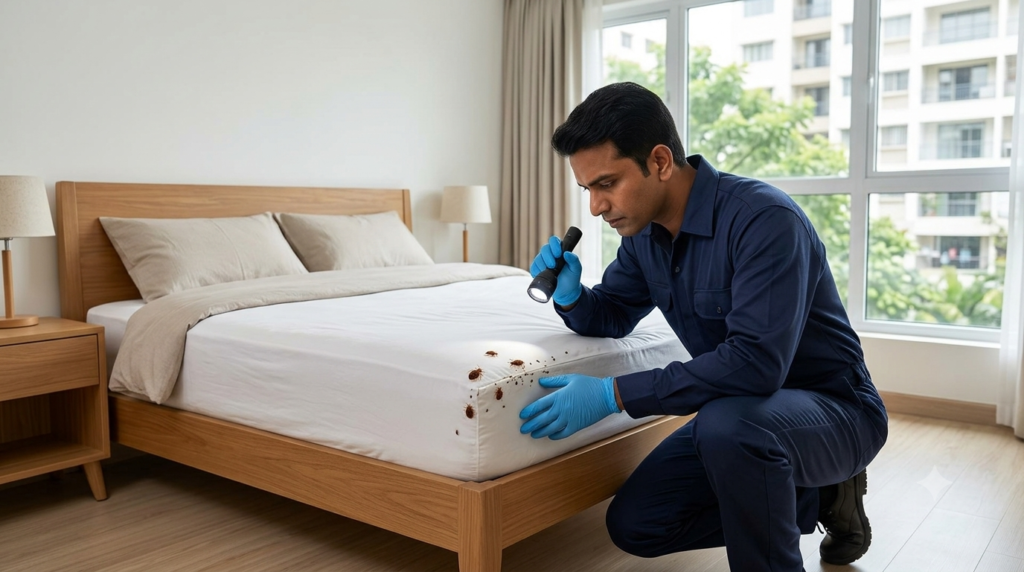
Bed bugs are small insects that can cause significant discomfort in homes, apartments, hostels, hotels and other residential spaces. They hide in mattress seams, bed frames, upholstered furniture and tiny cracks, making them difficult to detect during the early stages of an infestation.
In Pune, bed bugs can become a concern in both rented and owned properties. They may enter a home through luggage, second-hand furniture, clothing or other infested belongings. Importantly, bed bugs are not necessarily a sign of poor hygiene, and even a well-maintained bedroom can develop an infestation.
If you are searching for bed bug control in Pune, understanding the warning signs and taking the right steps can help prevent the problem from spreading. This guide explains how to identify bed bugs, prevent infestations and understand professional bed bug treatment options.
Bed bugs are small, flat, oval-shaped insects that feed on human blood. Adult bed bugs are generally reddish-brown and approximately 4–7 mm long, depending on their feeding status. Younger bed bugs are smaller and can be harder to notice.
These insects usually hide during the day and become more active when people are resting. They commonly shelter close to places where people sleep, including mattresses, bed frames, headboards and nearby furniture.
Bed bugs do not typically live exclusively in mattresses. As an infestation develops, they may spread into furniture joints, skirting boards, cracks and other sheltered areas around a room.
Because they are good at hiding, a careful inspection is often more useful than relying on bite marks alone.
Recognising an infestation early can help you arrange appropriate treatment before the problem spreads to additional areas.
Some people notice itchy red marks after sleeping. Bed bug bites can occur in clusters or lines, but their appearance varies from person to person.
Bite marks alone cannot confirm the presence of bed bugs because mosquitoes, fleas and other causes can produce similar skin reactions. Look for physical evidence around the bed as well.
Tiny reddish or brownish spots on sheets and pillowcases may be associated with bed bug activity. These marks can occur when an insect is accidentally crushed or when a small amount of blood is present after feeding.
Inspect the bedding, mattress edges and areas near the headboard if you repeatedly notice unexplained spots.
Small black or dark-brown marks around mattress seams, bed frames and furniture joints may be bed bug droppings.
Use a flashlight to inspect folds, stitching, corners and narrow gaps. A few isolated marks are not conclusive on their own, so look for other signs.
Bed bugs shed their outer skins as they grow. These pale, shell-like remains and tiny eggs may be found in sheltered locations around an infested bed.
Inspect mattress piping, wooden bed joints, headboards and nearby furniture carefully.
Finding a live bed bug is a strong indication that further inspection is needed. Adult insects are small, flat and reddish-brown, while younger ones can be lighter in colour.
If you find an insect, take a clear photograph or safely collect it in a sealed container for identification. Avoid crushing it or moving potentially infested belongings into another room.
Cockroach Control in Pune: Causes, Prevention Tips and Effective Treatment
Read this blog
Bed bugs can enter properties through everyday activities and belongings. They do not need dirty surroundings to survive.
Common ways they enter a home include:
Pune has a mix of apartments, paying guest accommodation, hostels and furnished rental properties. For any property, inspecting used furniture and luggage can help reduce the risk of bringing bed bugs indoors.
Prevention focuses on detecting bed bugs early and avoiding the accidental movement of infested items.
Check mattress seams, corners, labels and folds for live insects, dark spots, shed skins and eggs. Inspect the bed frame and headboard as well.
A flashlight can help you see into narrow gaps. Pay particular attention to the joints and undersides of wooden or upholstered furniture.
After returning from a trip, inspect suitcase seams and pockets before storing luggage in the bedroom. Keep bags away from beds until they have been checked.
If you suspect bed bugs, avoid placing the suitcase on beds or sofas. Follow suitable cleaning or treatment guidance for the luggage and its contents.
Inspect second-hand beds, mattresses, sofas and upholstered chairs before bringing them into your home. Check seams, joints, fabric folds and concealed areas.
Do not assume that furniture is free from pests because it looks clean or comes from a well-maintained property.
When bed bugs are suspected, wash and dry suitable bedding according to the fabric care label. Where the material permits, a high-temperature dryer cycle can help kill bed bugs and eggs.
Keep cleaned items separate from potentially infested belongings. Ordinary washing may not be suitable for every item, so follow the care instructions and seek professional guidance where necessary.
Avoid storing unnecessary clothes, cardboard boxes and bags under the bed. Keeping the area organised makes inspections easier and reduces the number of places where insects can hide.
Do not move suspected infested belongings into other rooms, as this may spread the problem.
Purpose-designed bed bug mattress encasements can help trap insects already inside a mattress and reduce hiding places in its seams. Choose an appropriate product and follow its instructions.
An encasement alone will not eliminate bed bugs hiding in the bed frame, furniture or other parts of the room.
Bed bugs can be challenging to control because they hide in narrow spaces and may remain undetected for long periods. Treating only the visible insects or spraying the mattress surface may leave hidden insects and eggs behind.
Some household insecticides may be unsuitable for mattresses or other sleeping surfaces. Incorrect application can expose occupants to chemicals, damage furnishings or make the infestation harder to manage.
Repeatedly switching products without identifying the infestation can also waste time and money. When bed bugs are confirmed, a coordinated treatment plan is generally more appropriate than relying on one quick fix.
Professional bed bug treatment typically begins with an inspection and a plan tailored to the infestation. The exact method depends on the property, the affected items and the treatment products available.
A technician examines the mattress, bed frame, headboard, nearby furniture and other potential hiding places. Additional rooms may need inspection if there are signs that the insects have spread.
This assessment helps establish the likely extent of the infestation.
The service provider may ask you to organise belongings, prepare bedding, provide access to furniture or follow specific laundering instructions.
Follow the instructions carefully. Avoid moving potentially infested items to untreated rooms, and ask how cleaned clothing and bedding should be stored.
Depending on the inspection, treatment may involve approved insecticides, targeted applications or other suitable methods. Not every product or method is appropriate for every surface, so the treatment should follow product-label directions and applicable requirements.
Ask the provider which areas will be treated and what precautions are needed for children, pets and other occupants.
One visit may not be sufficient in every case. Some treatment plans include follow-up inspections or repeat treatment to address insects that were missed or that emerge later.
Before booking, confirm whether follow-up visits are included and when they are recommended.
After treatment, follow the technician’s advice about cleaning, laundry, furniture and monitoring for further activity. Do not clean treated areas or use additional insecticides against the provider’s instructions.
A clear aftercare plan helps you understand what to expect and when to request another inspection.
8 Warning Signs of Termites in Your Home and How to Prevent Them
Read this blog
The cost of bed bug treatment in Pune varies according to the property and the extent of the infestation. There is no single price that applies to every home.
Factors that may influence the cost include:
When requesting a quotation, ask what is included, how many visits are recommended, what preparation is required and whether any retreatment terms apply. Compare the scope of service rather than price alone.
Choosing an appropriate pest control provider can make the treatment process easier to understand and manage.
Check experience: Look for a provider experienced in treating bed bugs in homes, apartments or accommodation properties similar to yours.
Ask about inspection: The provider should assess the affected areas before recommending a treatment plan.
Understand the method: Ask which treatment approach is proposed, which areas will be covered and whether repeat treatment may be necessary.
Confirm safety instructions: Find out how to prepare the room, protect personal belongings and follow re-entry instructions.
Check service terms: Confirm the price, number of visits, follow-up arrangements and any conditions attached to a guarantee.
Request aftercare guidance: A professional service should explain how to monitor for further activity and avoid spreading bed bugs.
If you are considering PestiGo Care for bed bug control in Pune, contact the team to discuss your situation and confirm the available treatment options, preparation requirements and service terms.
Yes. Bed bugs feed on blood and can live in clean homes, hotels and apartments. Good housekeeping helps with inspection but does not guarantee protection against an infestation.
Bite marks alone are not reliable for identifying bed bugs. Inspect the mattress seams, bed frame and surrounding furniture for live insects, dark spots, eggs or shed skins. A professional inspection can help confirm the pest.
Washing and drying suitable bedding can help remove or kill bed bugs on those items when the appropriate process is used. However, insects may remain in the bed frame, mattress, sofa or nearby cracks. Laundry alone is unlikely to resolve an established infestation.
Not necessarily. Depending on its condition and the extent of the infestation, a mattress may be treatable. Seek professional advice before disposing of it. If you discard infested furniture, handle and contain it carefully to avoid spreading bed bugs.
Safety depends on the treatment method, product and how instructions are followed. Inform the service provider about children, pets and anyone with particular sensitivities. Follow all preparation, ventilation and re-entry instructions, and keep people and animals away from treated areas as directed.
The timeline depends on the severity of the infestation, the treatment method and whether follow-up visits are needed. Some cases require multiple treatment stages and continued monitoring. Ask your provider for a realistic plan based on the inspection.
Bed bugs can sometimes move between adjoining properties, although they are commonly transported through infested belongings. If activity persists in an apartment building, consider notifying the property manager so affected areas can be assessed appropriately.
Bed bugs can be difficult to eliminate because they hide in mattresses, furniture joints and narrow cracks. Early identification, careful handling of belongings and a suitable treatment plan can help control the problem and reduce the risk of spreading it.
If you notice suspicious marks on your bedding, shed skins or live insects near your bed, arrange an inspection rather than relying on bite marks alone.
Looking for bed bug control in Pune? Contact PestiGo Care to discuss your pest concerns and ask about suitable treatment options for your home or property. A clear inspection and aftercare plan can help you take the next steps with confidence.