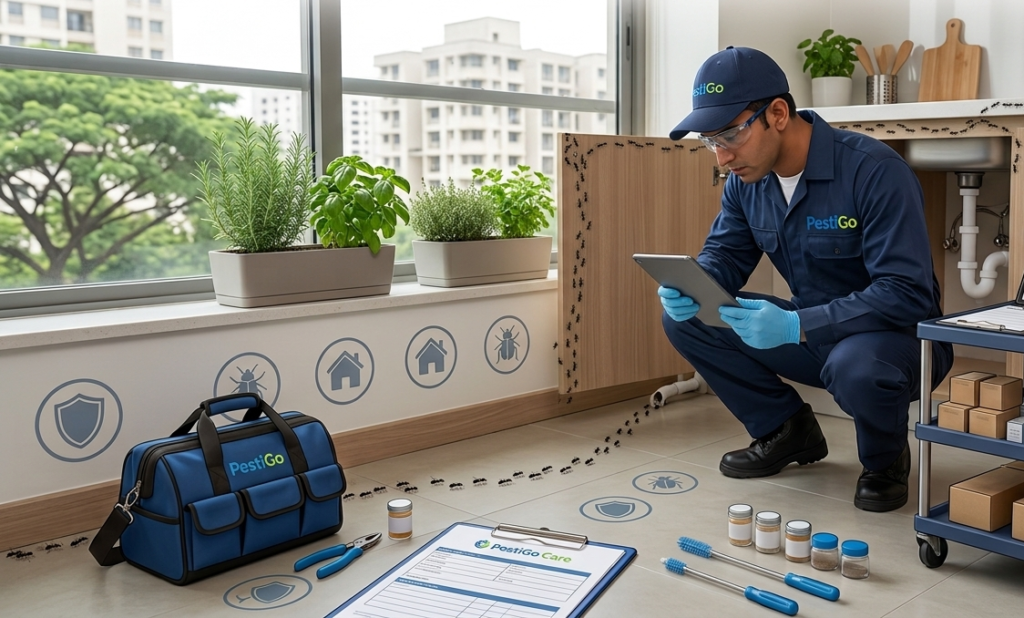
Ants are a common household pest in Pune. They often appear in kitchens, bathrooms, balconies, gardens and food storage areas while searching for food and water. Although a few ants may seem harmless, repeated trails or large numbers of ants can indicate an established colony nearby.
Ant infestations can become frustrating when ants repeatedly return after cleaning or when they enter cupboards, food containers and other indoor spaces. Different ant species have different nesting habits, so effective ant control involves identifying where the ants are coming from and addressing the conditions attracting them.
Simply spraying the ants you can see may provide temporary relief without resolving the underlying problem. A more effective approach combines proper sanitation, sealing entry points, managing moisture and selecting appropriate treatment methods.
In this guide, PestiGo Care explains the common causes of ant infestations, practical prevention tips and when professional ant control in Pune may be helpful.
Ants usually enter buildings in search of food, water or suitable nesting locations. Even a clean home can experience ant activity if small food residues, moisture or accessible entry points are present.
Common causes include:
Seasonal weather can also influence ant activity. Heavy rain may disturb outdoor nests and encourage some ants to seek shelter in buildings, while warm conditions can support activity around food and water sources.
In apartment complexes, ants may travel through shared walls, service ducts, balconies and plumbing openings. This can make the source difficult to locate from inside an individual flat.
Recognising early signs can help you decide whether routine cleaning is sufficient or a more thorough inspection is needed.
One of the most common signs is a line of ants moving between a food source and a hidden entry point. Ants often follow chemical trails left by other members of the colony.
Observe where the trail begins and ends. This can help identify entry gaps, food residues or potential nesting areas.
Ants around sugar jars, snack packets, fruit bowls and kitchen cupboards suggest that food is accessible.
Check whether packaging has gaps or whether small spills have accumulated behind appliances and inside drawers.
If ants return to the same counter, cupboard or bathroom after cleaning, there may be a nearby route or nest that has not been addressed.
Repeated activity does not automatically mean the colony is inside the home. Ants may be travelling from an outdoor nest through a small opening.
Some ants are attracted to moisture. Regular activity around sinks, bathroom corners, pipes and damp cupboards may indicate water availability or a possible entry route.
Repair leaks and investigate persistent dampness instead of relying solely on insecticide sprays.
Window frames, door gaps and balcony openings can provide access from gardens and outdoor areas.
Inspect these locations, particularly when ant trails appear after rainfall or when nearby plants touch the building.
Some ants create visible soil mounds or move loose material around cracks and outdoor surfaces. Other species nest in less obvious locations, such as beneath paving, inside wall cavities or around foundations.
Avoid disturbing an unknown nest without understanding the species and the appropriate control method.
Winged ants may appear during reproductive swarming periods. Their presence does not necessarily confirm an infestation inside the building, but repeated sightings deserve attention.
Winged ants can sometimes be confused with termites. If you notice large numbers of winged insects or discarded wings, seek an accurate identification before choosing a treatment.
How to Prevent Bed Bugs at Home: Practical Tips for a Comfortable Bedroom
Read this blog
Prevention focuses on removing what attracts ants and limiting their access to indoor spaces.
Wipe kitchen counters after preparing meals and clean up sugary spills promptly. Sweep or vacuum crumbs from floors, corners and beneath dining tables.
Pay attention to areas behind refrigerators, microwaves and other appliances where food particles can collect unnoticed.
Keep sugar, flour, grains, biscuits and other frequently used food items in tightly sealed containers.
Avoid leaving open packets on counters overnight. Inspect pantry shelves regularly and remove damaged packaging or spilled food.
Use bins with secure lids and empty them regularly. Clean the inside and outside of bins when food residue accumulates.
For apartment residents, keeping shared garbage collection areas clean can help reduce food sources that attract ants and other pests.
Inspect taps, pipes, sink cabinets and bathroom fittings for leaks. Dry wet surfaces when practical and address persistent dampness.
Moisture management is especially important when ants repeatedly appear around plumbing or utility areas.
Check gaps around window frames, door edges, skirting boards, plumbing connections and cable openings.
Seal suitable cracks with appropriate materials while preserving ventilation and access to essential utilities. This can help reduce the routes ants use to enter your home.
Keep fallen fruit, food waste and unnecessary debris away from entrances. Trim vegetation that directly touches walls, windows or balcony doors.
Inspect plant pots and their surrounding areas if ant trails repeatedly appear near balconies or gardens.
Pet food can attract ants when left exposed for extended periods. Store pet food securely, clean feeding bowls and remove uneaten food according to your pet’s feeding routine.
Keep any pest control products away from pet feeding areas.
Juice, soft drinks, syrups and other sugary liquids can attract ants. Clean spills promptly and rinse used containers before placing them in waste or recycling bins.
Follow the visible trail to identify the likely entry point and food source. This can help you decide whether sealing a gap, cleaning an area or investigating a nearby nest is necessary.
Avoid applying multiple insecticide products indiscriminately, as this may create unnecessary exposure and may not eliminate the source of the infestation.
A few ants may be managed by removing food and moisture sources. However, recurring trails across several rooms or repeated activity after cleaning may require a more targeted approach.
Early inspection can help identify the species, likely nesting area and appropriate treatment strategy.
The most suitable ant control method depends on the species, the location of the nest, the severity of the problem and whether children, pets or sensitive areas are present.
Removing accessible food and water can make the environment less attractive to ants. Clean affected surfaces, secure food containers and correct moisture problems.
This is an important first step, but it may not resolve a colony established inside a wall cavity or another inaccessible location.
Blocking suitable gaps can reduce the movement of ants into indoor spaces. However, it is important to identify the routes correctly and avoid sealing openings that serve essential ventilation or drainage purposes.
Where ants originate outdoors, the surrounding environment may also need attention.
Some ant control products use bait that worker ants carry back to other members of the colony. The effectiveness of bait depends on the ant species, the bait formulation and whether the ants accept it.
Use only products labelled for the intended setting and follow the instructions carefully. Place bait where children and pets cannot access it, and avoid spraying incompatible insecticides near bait stations unless the product instructions specifically allow it.
A suitable insecticide may be used in specific locations when appropriate. The treatment should be selected according to the ant species, nesting location and product label.
Do not spray chemicals on food, utensils or food preparation surfaces. Follow all ventilation, handling and re-entry instructions.
When ants repeatedly return, a professional inspection can help determine whether the source is indoors, outdoors or within a concealed structural area.
A qualified provider can recommend an appropriate combination of baiting, targeted treatment, sanitation advice and entry-point management.
How to Get Rid of Termites in Your Home: Complete Termite Control Guide | PestiGo Pest Control
Read this blog
Home prevention is often useful for small, occasional problems, while recurring infestations may require a more targeted assessment.
DIY prevention may be suitable when:
Professional treatment may be useful when:
The goal is not merely to kill visible ants but to reduce the conditions and routes that allow the infestation to continue.
Ant control costs in Pune vary according to the property, infestation severity and treatment method.
Factors that may influence the price include:
Before booking, request a quotation explaining the inspection, treatment areas, safety instructions and any additional charges. Ask whether the service includes advice on preventing ants from returning.
Choosing a pest control provider carefully can help you avoid unnecessary treatments and repeated expenses.
PestiGo Care can help homeowners and businesses explore pest control options based on their property and requirements.
Ants may return if a food or water source remains accessible, an entry gap has not been sealed or the colony is still active nearby. Cleaning is important, but persistent activity may require a more targeted treatment.
Crumbs, sugar, exposed food, food residue in bins and moisture around sinks are common attractants. Secure storage, regular cleaning and leak repairs can help reduce the problem.
Most household ants are primarily a nuisance, but some species can bite or sting, and ants can contaminate exposed food as they move across surfaces. The level of concern depends on the species and circumstances.
Not always. Spraying visible ants may reduce their numbers temporarily without addressing the colony or entry route. Depending on the species, suitable baiting and source management may be more effective.
Ants can travel through small cracks, gaps around pipes and cable openings. Inspect these areas and seal suitable gaps using appropriate materials without interfering with electrical or building safety.
Keep food sealed, clean spills, address leaks and seal suitable entry points. If ants appear across multiple flats, coordinate with the housing society or property manager to investigate common areas and possible shared sources.
Safety depends on the product, application method and exposure conditions. Ask the service provider for specific precautions, follow the product label and keep children and pets away from treated areas for the required period.
Ant infestations can be frustrating when trails continue to appear in kitchens, bathrooms, balconies and food storage areas. Keeping surfaces clean, storing food securely, managing moisture and sealing suitable entry points can help prevent many common problems.
If ants keep returning despite your efforts, a professional assessment can help identify the likely source and determine an appropriate control method.
Looking for ant control in Pune? Contact PestiGo Care to discuss your pest control requirements and explore suitable inspection, treatment and prevention options for your home or business.