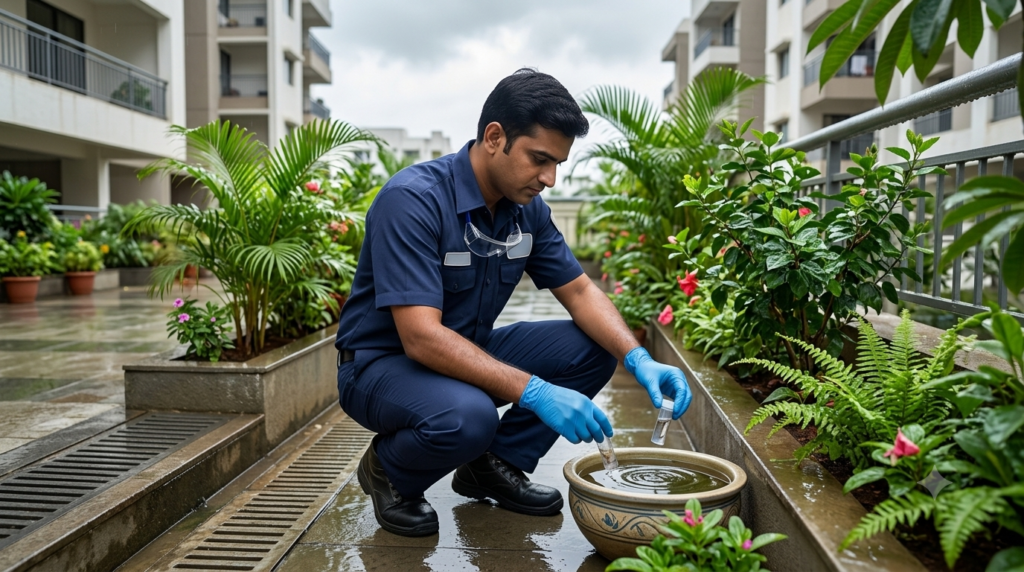
Mosquitoes are a common concern for homeowners, apartment residents and businesses in Pune. Stagnant water in plant trays, open containers, clogged drains and construction areas can create breeding opportunities, while poorly maintained outdoor spaces may attract mosquitoes around homes and buildings.
Mosquito Control in Pune are more than a nuisance. Their bites can disturb sleep, affect outdoor activities and, in some cases, transmit diseases such as dengue, malaria and chikungunya. Effective mosquito control involves more than spraying an insecticide. Identifying breeding sites, removing standing water and using appropriate professional treatments can help reduce mosquito activity.
In this guide, PestiGo Care explains the common causes of mosquito problems in Pune, practical prevention methods, available treatment options and when professional mosquito control may be necessary.
Pune experiences seasonal rainfall, warm weather and rapid urban development. During and after the monsoon, standing water can collect in residential societies, gardens, construction sites and poorly drained areas. Even small amounts of water may support mosquito breeding, depending on the species.
Mosquito problems can also occur outside the monsoon season when water is stored in uncovered containers or drainage systems do not flow properly.
Common locations where mosquitoes may breed or rest include:
Finding and addressing these locations is an essential first step in mosquito control.
A few mosquitoes entering through an open window may not indicate a major infestation. However, recurring mosquito activity can suggest nearby breeding sites or gaps in preventive measures.
Look for these warning signs:
If family members regularly experience mosquito bites indoors or around balconies, gardens and entrances, mosquitoes may be resting nearby or entering from surrounding areas.
Check areas where water collects, particularly after rain. Some mosquito larvae may be visible as small, wriggling organisms near the water’s surface, although they can be difficult to spot.
Many mosquito species are more active during particular periods of the day. Some bite more frequently around dawn and dusk, while others, including certain dengue-transmitting mosquitoes, may bite during the daytime.
Mosquitoes in bedrooms may enter through open windows, doors, ventilation gaps or damaged screens. They may also rest in shaded areas indoors.
If mosquito activity continues despite routine cleaning, inspect nearby water-holding locations and consider a professional assessment.
Monsoon Pest Control in Pune: 7 Effective Tips to Protect Your Home
Read this blog
The best mosquito prevention strategy combines source reduction, physical barriers and appropriate protective measures.
Inspect your home and surrounding areas at least once a week. Empty water from plant saucers, buckets, unused containers and other objects that collect rainwater.
Do not simply pour water into a nearby drain if it can collect again. Empty, clean or store the container in a way that prevents water from accumulating.
If your household stores water, use containers with secure-fitting lids. Check overhead tanks, underground storage areas and smaller domestic containers for gaps or damaged covers.
Mosquitoes can breed in some water storage containers when they are accessible to adult mosquitoes.
Blocked drains and gutters can retain water for extended periods. Remove accumulated leaves and debris, and arrange repairs where drainage problems persist.
For apartment societies, coordinate with the maintenance team to inspect common drainage areas, terraces and rainwater collection points.
Fine-mesh screens help reduce mosquito entry while allowing ventilation. Repair tears and check for gaps around window frames, balcony doors and ventilation openings.
Keep doors closed where practical, particularly during periods of high mosquito activity.
Trim overgrown vegetation, remove discarded containers and keep outdoor areas tidy. Plants do not all create mosquito breeding sites, but dense shaded spaces may provide resting places for adult mosquitoes.
Inspect plant trays, decorative pots and garden equipment after rainfall.
Mosquito nets can provide a physical barrier while sleeping, particularly when windows are open or screens are unavailable.
Use mosquito repellents according to the product label. Choose products appropriate for the intended user and follow precautions for children, pregnant people and individuals with sensitivities. Avoid applying products in ways that are not permitted by their labels.
Water-holding equipment should be maintained according to the manufacturer’s instructions. Empty and clean relevant reservoirs regularly, and do not allow water to remain stagnant in unused equipment.
Also inspect discarded tyres, plastic sheets and storage items after heavy rainfall.
In apartment complexes, mosquitoes may breed outside individual flats. Shared gardens, basements, terraces, drains and construction areas should be inspected as part of routine maintenance.
Report persistent standing water to the responsible maintenance team. Coordinated prevention is usually more effective than treating only one apartment.
Fogging may reduce exposed adult mosquitoes in certain circumstances, but its effect can be temporary. It does not reliably eliminate mosquito eggs and larvae in breeding sites.
Source reduction and targeted treatment of appropriate breeding locations remain important. Fogging should be carried out only when justified and by trained personnel following applicable safety guidance.
If mosquito activity remains high despite preventive measures, a professional pest control assessment can help identify contributing areas and recommend suitable treatment.
A reliable provider should explain the treatment method, preparation requirements, safety precautions and any follow-up visits that may be needed.
Use this simple inspection checklist around your property:
Not every mosquito species breeds in the same type of water. Some prefer small domestic containers, while others use different outdoor habitats. A thorough inspection should consider the surrounding environment as well as the home itself.
Professional mosquito control may involve several approaches, depending on the location, mosquito activity and likely breeding sources.
The first priority is identifying and eliminating standing water wherever possible. This may involve improving drainage, emptying containers and correcting maintenance issues.
Where standing water cannot be removed, an appropriately selected larval control treatment may be considered by trained professionals. The product must be suitable for the specific site and used according to its label and applicable regulations.
Do not add household chemicals or unapproved insecticides to drinking water tanks, ponds or drains.
When adult mosquitoes are causing persistent problems, a professional may recommend a targeted treatment for suitable resting areas or outdoor locations.
The method should be selected based on the site assessment, and residents should follow all instructions regarding access, ventilation, pets and re-entry.
Mosquito control is not always a one-time task. New breeding sites may appear after rainfall, and mosquitoes can enter from surrounding properties. Follow-up inspections and ongoing prevention help identify recurring issues.
8 Warning Signs of Termites in Your Home and How to Prevent Them
Read this blog
Home prevention is essential, but it may not resolve every mosquito problem.
DIY prevention is useful when:
Professional assessment may be useful when:
Professional treatment should complement, not replace, regular source reduction and property maintenance.
The cost of mosquito control in Pune varies according to the property and the treatment required. There is no single price that applies to every home or business.
Factors that can influence the cost include:
Before booking a service, ask for a clear quotation that describes the treatment area, proposed method, safety instructions and any follow-up charges. Compare the scope of service rather than choosing a provider based on price alone.
Before hiring a pest control company, consider these points:
PestiGo Care can help homeowners and businesses explore suitable pest control options based on their specific requirements.
Consider taking preventive action before and during the monsoon, when rainfall can create new breeding sites. However, mosquito control may be necessary throughout the year if standing water or persistent mosquito activity is present.
No. Fogging may reduce exposed adult mosquitoes under suitable conditions, but it does not reliably eliminate eggs and larvae in breeding sites. Removing standing water and addressing the source of the problem are essential.
Keep water containers covered, remove standing water from balconies, maintain window screens, inspect plant trays and report drainage issues to your housing society. If mosquitoes continue to appear, inspect common areas as well as your flat.
Some mosquito species can transmit diseases, including dengue, malaria and chikungunya. Not every mosquito carries a disease, but reducing mosquito bites and breeding sites is an important preventive measure.
The duration of the effect depends on the treatment method, environmental conditions, mosquito species and whether new mosquitoes continue to enter the property. No treatment should be assumed to provide permanent protection without ongoing prevention.
Safety depends on the treatment product, application method and exposure conditions. Ask the service provider for specific precautions, follow the product label and keep children and pets away from treated areas for the required period.
Yes. Certain mosquito species can breed in surprisingly small water-holding containers. Regularly emptying and cleaning such containers can help reduce breeding opportunities.
Mosquito problems can develop quickly when water collects around homes, balconies, gardens and shared residential spaces. Regular inspections, covered water storage, clean drainage systems and suitable physical barriers can significantly improve prevention efforts.
When mosquito activity persists, a professional assessment can help identify likely breeding sources and determine whether targeted treatment is appropriate.
Looking for mosquito control in Pune? Contact PestiGo Care to discuss your property’s pest control requirements and find out which prevention and treatment options may be suitable for your home or business.