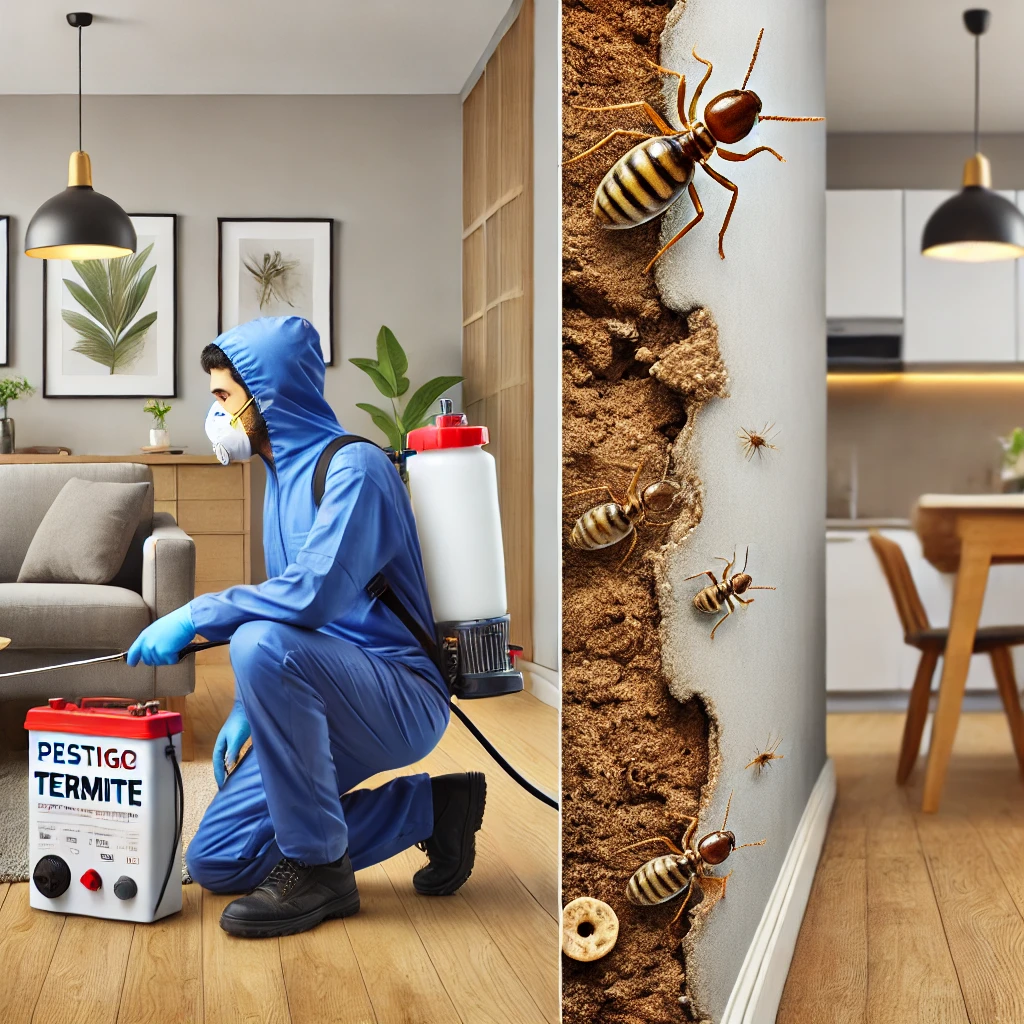
Termites can cause serious damage to wooden furniture, doors, flooring and other parts of a property if an infestation is left untreated. The difficult part is that termites often remain hidden for a long time, meaning visible damage may appear only after the infestation has developed.
So, how can you prevent termites at home?
The best approach is to control moisture, reduce termite-friendly conditions, inspect vulnerable areas regularly and arrange professional termite treatment when signs of infestation appear.
In this guide, we explain how to prevent termites, the warning signs to look for and when professional termite control may be necessary.
Termites are attracted to conditions that provide access to food, moisture and shelter.
Common factors that can increase termite risk include:
Reducing these conditions can help make your property less suitable for termites.
Moisture can create favourable conditions for termites and other pests.
Regularly check areas around:
Repair leaking pipes and taps as soon as possible.
Avoid keeping wooden furniture, cardboard or other cellulose-based materials in damp areas.
If furniture is placed against a wall, leave enough space for ventilation and inspection.
Pay particular attention to furniture located near bathrooms, kitchens and other moisture-prone areas.
Poor ventilation can contribute to moisture accumulation.
Make sure areas such as storage rooms, basements, cupboards and other enclosed spaces have appropriate airflow.
Reducing excess moisture can help create less favourable conditions for termites.
If you store firewood, timber or unused wooden materials, avoid placing them directly against exterior walls.
Keeping these materials separated from the structure makes it easier to inspect the property and can reduce potential termite pathways.
Inspect furniture, door frames, wooden cupboards and other timber structures for unusual changes.
Look for:
Early detection can make termite management easier.
Recognising termite activity early is important because termites can remain hidden inside wood or soil.
Some warning signs include:
Mud tubes or tunnels on walls, foundations or other structures can indicate termite activity.
Damaged timber may sound hollow when lightly tapped because termites can consume wood internally.
You may find discarded wings near windows, doors or light sources after termite swarmers emerge.
Wood may become weak, cracked or visibly damaged as termite activity progresses.
Certain types of termite damage can cause surfaces to appear uneven or blistered.
If you notice several of these signs, consider arranging a professional inspection.
Yes. Termites can remain inside wood, walls or soil and may not be immediately visible.
This is one reason routine inspection is important, especially for older properties or buildings with previous termite activity.
Visible damage may only become obvious after termites have already been active for some time.
Depending on the termite species and property conditions, termites may gain access through soil, cracks, construction gaps, wooden structures and other pathways.
Potential entry areas include:
Sealing appropriate openings and managing moisture can help reduce potential access points.
Cleaning is useful for general pest prevention, but cleanliness alone does not guarantee protection from termites.
Unlike pests that are primarily attracted to food waste, termites can feed on cellulose-containing materials such as wood and other plant-based materials.
Therefore, termite prevention should also include moisture management, structural maintenance and regular inspection.
There is no single inspection schedule that suits every property.
Properties with a history of termite activity, moisture problems, extensive wooden structures or other risk factors may benefit from more frequent professional inspections.
If you notice signs such as mud tubes, damaged wood or discarded wings, do not wait for a routine inspection.
Arrange an assessment as soon as possible.
Professional termite control may be appropriate when:
A professional pest-control technician can inspect the property and determine the appropriate treatment based on the infestation and construction of the building.
Professional termite treatment begins with identifying signs of activity and potential entry or infestation areas.
Depending on the property and termite problem, pest-control professionals may use appropriate treatment methods designed to manage termite colonies and protect vulnerable areas.
The treatment approach can depend on:
Because termite problems can vary significantly from one property to another, a professional inspection is useful before selecting a treatment approach.
Termite treatment should be followed by prevention and monitoring.
Homeowners can help reduce future risk by:
Pune properties can include apartments, independent houses, villas, offices and commercial buildings with different construction materials and environmental conditions.
If you notice signs of termites, professional assessment can help determine the extent of the problem and the appropriate treatment.
PestiGo provides pest-control services for residential and commercial properties in Pune, including termite-control solutions.
The best prevention strategy is to reduce moisture, maintain drainage, avoid unnecessary wood storage near the property, inspect wooden structures regularly and address termite activity as soon as signs appear.
Common signs include mud tubes, damaged or hollow-sounding wood, discarded wings, small holes and unexplained changes in wooden structures.
Yes. Termites can damage wooden furniture and other cellulose-containing materials. Regular inspection can help identify activity before damage becomes extensive.
Moisture can create favourable conditions for termite activity. Fixing leaks, improving drainage and reducing damp areas are therefore important parts of termite prevention.
Termites can move through concealed pathways and structural gaps depending on the property. Signs of activity may sometimes appear around walls, foundations or wooden structures.
Basic prevention measures can help reduce termite risk, but an established infestation may require professional assessment and treatment.
The duration and effectiveness of termite protection depend on the treatment method, property conditions, termite activity and other factors. A professional pest-control provider can explain the expected protection period for the selected treatment.
Termites generally do not pose the same direct health concerns as some other household pests, but they can cause significant damage to wooden structures and property if an infestation is not managed.
Pay attention to moisture control, drainage, construction gaps and vulnerable wooden structures. Professional termite protection can also be considered as part of property maintenance.
Knowing how to prevent termites at home can help protect wooden furniture and other vulnerable parts of your property.
Start by controlling moisture, fixing leaks, improving ventilation, keeping wood away from damp areas and regularly inspecting wooden structures. If you notice mud tubes, damaged wood, discarded wings or other warning signs, arrange a professional termite inspection rather than waiting for the damage to become more extensive.
For homeowners and businesses looking for termite control in Pune, PestiGo can assess the pest problem and recommend an appropriate treatment solution.